Architects’ Sam Carter says online scrutiny has taken the joy out of performing
The vocalist’s admission follows years of public discussion about his screams, raising questions about the scrutiny placed on singers in heavy music.
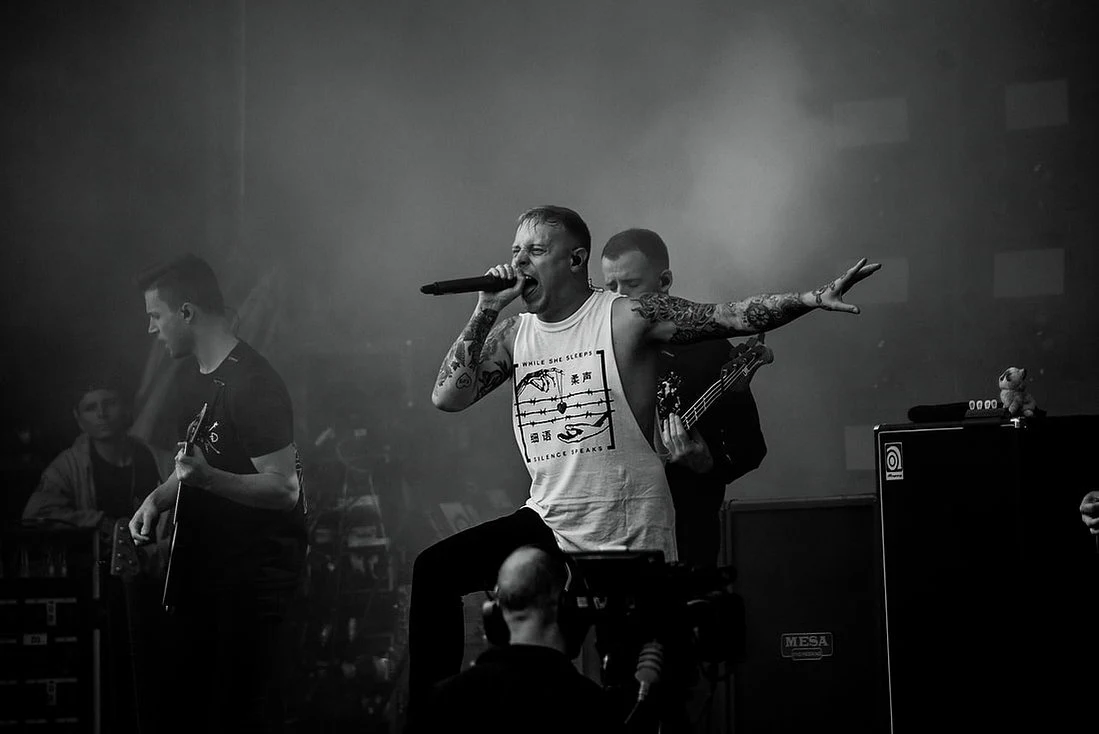
Sam Carter has spent more than 20 years developing one of British metalcore’s most recognisable voices. Now, the Architects frontman says the constant scrutiny of his live vocals has left him struggling with performance anxiety and unable to enjoy being onstage.
In a statement posted on Instagram on 16 October, Carter described how criticism intensified after Architects’ appearance at Germany’s Rock am Ring festival this summer. He had been attempting a new vocal technique in front of an audience of around 90,000. The response online became increasingly hostile, he said, leaving him physically and emotionally exhausted.
“My anxiety and constant focus on my voice have gotten me to a place where the joy of performing has been taken away from me,” Carter wrote.
He described reaching a point where, when he went to scream, his own thoughts would prevent him from doing what he had done throughout his career. Over the past year, he has been working with vocal coach David Benites of Extreme Vocal Academy. He also disclosed that he attends weekly therapy sessions and takes medication for anxiety.

Carter’s statement deserves attention not because musicians should be protected from criticism, but because it describes a performer becoming increasingly preoccupied with how he will be judged while trying to do his job.
A problem Architects have already written about
This is not the first time Carter has discussed the relationship between criticism and his mental health.
In a February 2025 interview with The Guardian, he spoke about his inner critic and the way negative comments from fans had become intertwined with his own self-judgment. He described anticipating criticism by criticising himself first, a defence that offered little protection from the pressure he was experiencing.
The subject also runs through Architects’ eleventh album, The Sky, the Earth & All Between. On ‘Seeing Red’, the band take aim at unsolicited advice and hostile commentary. ‘Whiplash’ addresses a wider online culture in which people look for opportunities to attack those with whom they disagree.
The distinction between those songs and Carter’s latest statement is significant. The band have previously turned frustration with online discourse into material. Carter is now describing the personal consequences of living with that scrutiny while continuing to perform.
It would be simplistic to suggest that the songs predicted this moment. But taken together, the interviews, lyrics and latest statement show that the subject has persisted beyond a single release cycle.
The voice is the performance
For a metalcore vocalist, screams are not an occasional flourish. They are a central part of the performance, requiring control, technique and consistency across demanding live schedules.
That makes Carter’s account particularly relevant to a genre in which vocal ability is frequently debated through short clips taken from festival appearances or individual shows. A few seconds of footage can circulate without much of the surrounding performance, while comments and comparisons remain visible long after the show has ended.
There is also a distinction between vocal criticism and conclusions about a singer’s ability. A performance can fall short of expectations without establishing that the vocalist has lost their ability or that every subsequent performance will be the same.
Research into extreme vocal techniques offers useful context here. A longitudinal study published in the Journal of Voice examined 20 professional singers who performed and taught rough vocal effects over a 14-year period. The researchers found that the participants maintained healthy laryngeal assessments and voice-related scores. The findings do not establish anything about Carter’s individual vocal health, but they challenge the assumption that screams and growls are inherently damaging when performed using appropriate technique.
A separate 2026 review of research into metal musicians’ health found that the physical and psychological demands of the genre remain under-investigated. A study published in Music & Science in September 2026 similarly identified performance intensity, preparation and the physical and mental demands of performing as important themes in interviews with metal and rock musicians.
Neither study establishes that online criticism causes vocal problems. Carter’s own statement, however, makes clear that he believes the scrutiny has contributed to his anxiety and affected his ability to perform.
Criticism is part of music. So is accountability.
There is no reason to pretend every Architects performance has been flawless, or that fans should refrain from discussing a singer’s technique. Live music is open to judgment, and musicians who perform for large audiences will inevitably face comparisons with studio recordings and previous shows.
But criticism becomes less useful when it moves from assessing what happened onstage to making sweeping judgments about the person performing. Repeated commentary can also turn an individual performance into a lasting narrative about an artist, with every subsequent appearance assessed against it.
The audience is entitled to an opinion. That does not mean every opinion needs to become a public verdict, or that repetition makes it more accurate.
Carter has said he is working to regain his confidence and wants to return to enjoying performing with his bandmates. He has not suggested that he will stop screaming or that his performances should be exempt from scrutiny.
The question raised by his statement is therefore not whether musicians should be immune to criticism. They should not. It is whether the way that criticism is delivered, amplified and repeated serves any meaningful purpose once discussion of the music becomes sustained judgment of the person making it.
For a vocalist who has spent two decades building a career around an exceptionally demanding style of singing, that is not an abstract question. Carter says the consequences have reached the stage with him.