Interview
Father Hell: The Freedom to Start Again
After finding himself creatively constrained by the expectations surrounding VANT, Mattie Vant took a different route with Father Hell. On debut album Trust Some Machines, he explores the possibilities of working without a fixed formula, embracing the unexpected and allowing the music to find its own meaning.
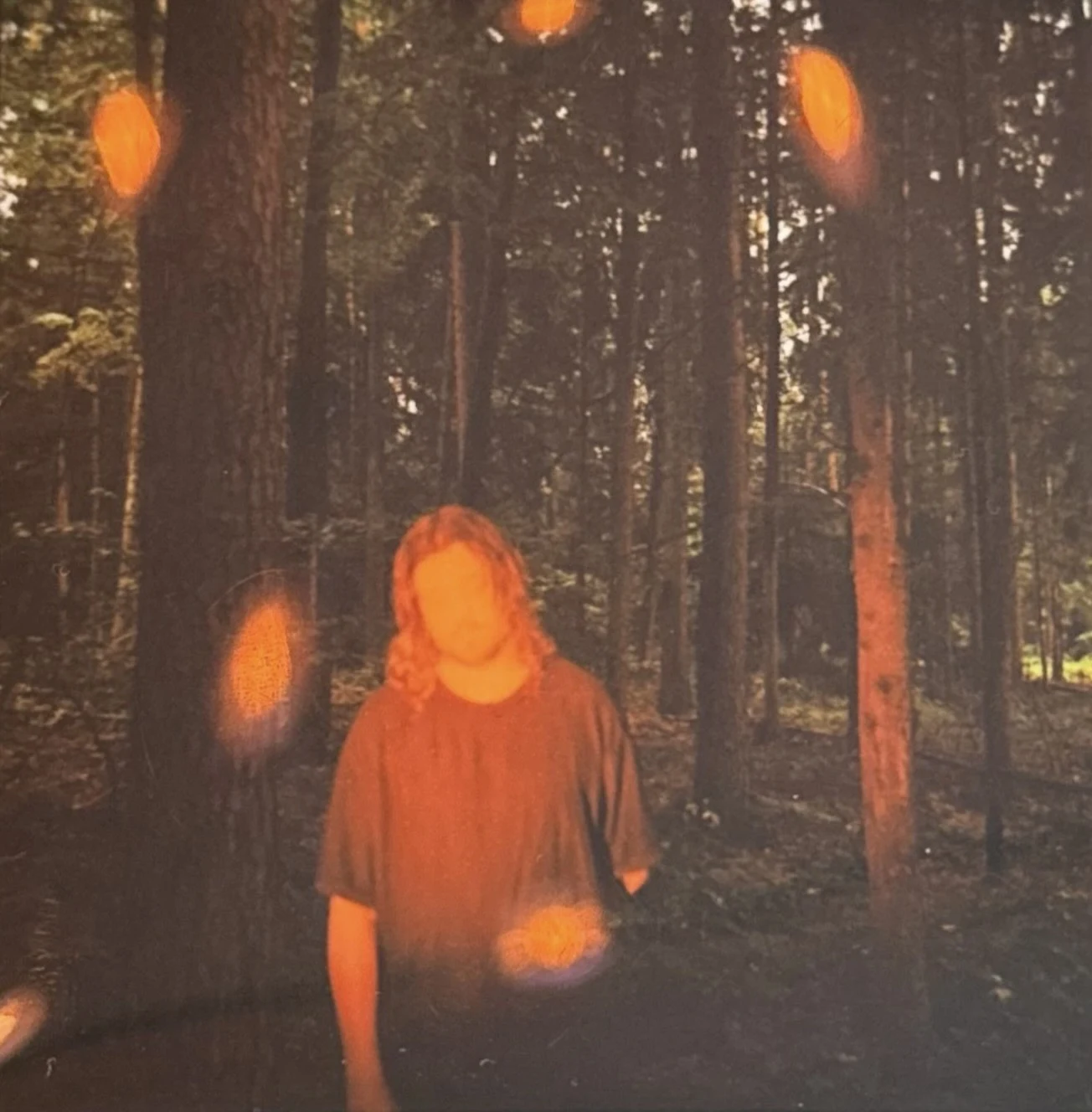
Trying to move forward while keeping one foot in the past is rarely a comfortable creative position. For Mattie Vant, it eventually became the defining problem of continuing with VANT. Having intended to end the project after its first album, he found himself making two more records while trying to retain an identity he was increasingly keen to move beyond. “VANT should have ended after the first album (as intended at the time) but various people in the industry encouraged me continue under that name which resulted in two more records that were very much me trying to do something different whilst retaining enough of the essence of VANT for it to still be possible for it to be categorised as such, which is not a great place to be creatively.”
The difficulty wasn’t simply that he wanted to make a different kind of record. It was the expectation that whatever came next would still need to be recognisable as VANT. That tension, he says, became the main source of writer’s block over the past five years.
Father Hell gave him a way to step outside that expectation. A different identity also meant a different relationship with the audience, without the assumption that he would continue playing songs from the VANT catalogue or revisiting the music he had made a decade earlier.
“A new name is total freedom. A reset. I’m also just not really interested in the music I was making 5 / 10 years ago anymore, there would be an expectation for me to play old material if I had continued under the VANT pseudonym. I don’t have that pressure as Father Hell and I also have an opportunity to develop a new character / perception in the process.”
That freedom wasn’t just reflected in the sound of the new project. It shaped the way he approached making the album itself. Trust Some Machines began with only three completed tracks. Vant gave himself a week to finish the record, writing and recording much of the remaining material during that period. Working to analogue four-track tape imposed limitations, but rather than treating those restrictions as obstacles, he allowed them to influence the arrangements and the decisions he made along the way.
 Watch on YouTube
“This limitation meant I was far less precious about what I would usually deem to be finished or how many times I would attempt to commit it to tape. Especially structurally, a lot of it was improvised then embellished, fragmented and condensed.”
It’s an approach that challenges the assumption that a song needs to be fully formed before it enters the studio. On this record, the recording process was part of the writing. Ideas could change shape, arrangements could be pulled apart, and imperfections were allowed to remain. The absence of endless opportunities to revisit a track encouraged him to consider the whole rather than obsess over every detail.
“Every time you try to better something you also run the risk of making it worse, you quickly learn to live with imperfections and start to think about the bigger picture much earlier in the process.”
‘Your Shadow On The Ground’ became an important moment in the process, not least because it challenged some of Vant's previous instincts about what a finished song should sound like. “Even though it is not a particularly unconventional track I would say that ‘Your Shadow On The Ground’ is probably the track that feels most removed for me. It was a track that was written and recorded in the last 45 minutes of my self-imposed deadline for completing the record. It’s very raw, very confessional and ties together the rest of the album without overthinking or questioning anything too much.”
He is particularly attached to the result, describing it as a reminder of how he wants to approach recording in future: “It is throwaway and direct for all the right reasons. For me, it makes the record and is somewhat a mantra of how I will approach recording moving forward, ultimately without fear.”
The title Trust Some Machines was already decided before the album was recorded. Its initial inspiration came from the four-track tape format and the way the tools used to make music can influence what gets created. But Vant’s thinking reaches beyond the recording studio. He sees the title as a way of considering the wider systems people live within, from technology to conventional lifestyle choices.
The question isn’t whether modern technology should be rejected altogether. Vant recognises that a completely off-grid existence is unrealistic, but believes people still have choices about how much of themselves they give to the systems around them. “We can however determine how much we choose to engage with modernity and how much we are willing to give of ourselves and our privacy. Do we need to be so intertwined with what is fed to us as ‘the present’? Do we have to be transfixed on the precipice, the pinnacle of human advancement?”
His questions are deliberately open-ended. They consider whether constant access to information and the pursuit of progress necessarily make life better, and whether limitations can sometimes offer something more valuable. The four-track format provides an interesting parallel: a technical restriction that might appear to limit creativity instead became the condition that helped him make the record.
That willingness to leave space for interpretation is equally important to his writing. VANT often communicated its ideas directly, whereas Father Hell takes a less explicit route. Vant says the change comes from feeling secure enough in his own beliefs that he no longer needs to explain them at every opportunity.
“Father Hell is almost the exact opposite approach. I am trying to write from a place of complete lucidity. The lyrics are coming from a subconscious place. This stems from a confidence in my position in the world. I have nothing to prove, I know what I believe in and what my values are. It means that I can be less direct and still convey my morals without being overly preachy, leaving more room for the listener to draw their own conclusions.”
He has also become more comfortable exploring perspectives that aren’t necessarily his own. Although he describes the album as a distillation of himself and his opinions, he deliberately introduced other voices and views, allowing contradiction and conflict to become part of the writing. He points to Leonard Cohen, Neil Young, Bob Dylan, Nick Cave, Nina Simone and David Berman as artists who have used this approach.
The result is a wider range of possibilities for the songs, without requiring every lyric to be read as a direct statement of his personal beliefs. Asked how he decides which parts of himself to keep private, Vant rejects the idea that he needs to make that distinction. “I don’t filter myself in this way and because fact and fiction is blurred throughout everything I do I feel I can say anything without it being perceived as wholly myself or equally something completely external.”
That blurred boundary between author and narrator also affects how he experiences the finished record. He doesn’t necessarily attach one meaning to a song and leave it there. Instead, the subject matter can change with each listen and performance, depending on where he is and how he approaches the material. “The whole album falls into this categorisation. The nature of not overthinking anything means that the subject matter changes with every listen and every performance. I feel very protective of this epiphany as it has completely reinvigorated my love of music and what it can do for me on a personal level.”
It’s perhaps the most telling part of the conversation. The creative process has not simply given him a different sound; it has changed what he wants from music in the first place. Rather than treating a finished song as a fixed statement, he can return to it and find something different.
For anyone arriving at Father Hell through VANT, the production is likely to be the most immediate surprise. Vant describes the album as the rawest thing he has made, with no interest in conventional expectations or in appealing to anything beyond itself. He seems comfortable with the possibility that some listeners may take time to understand the change.
So far, he says, Father Hell feels as though it has found a completely new audience. He expects some VANT listeners may eventually make the connection, but isn’t particularly concerned with how quickly that happens. His own relationship with the artists he loves has often taken time to develop, and he sees no reason to expect an immediate connection from everyone else. “People need a way in and that could come instantaneously or after 3, 4, 5, 6 albums. Those connections often end up being the strongest in the long run.”
There are already plans to take the project further. Vant intends to make at least two more albums next year using the same techniques, allowing him to see where this approach leads across three records before deciding what comes next. He is curious about how the project might develop, but has no desire to impose a direction on it prematurely.
“For now I just want to keep my head down and keep moving forward while I’m still excited by everything I’m doing.”
Trust Some Machines is released on 4 December 2026 via Nordic Records.