Feature
Princess Goes
Princess Goes: “We’re Not Afraid to Go Down the Wrong Road”
The New York trio have spent eight years making music on their own terms. As they prepare to release their fourth album, ‘3’, drummer Peter Yanowitz reflects on creative freedom, unexpected discoveries in the studio and a band none of them anticipated building.
2026-10-22T16:47:19Z · Words by The Pit Standard
Introduction
Princess Goes began with a friendship forged on Broadway, but the music the three members eventually made together was a long way from the theatrical production that brought them into each other's orbit.
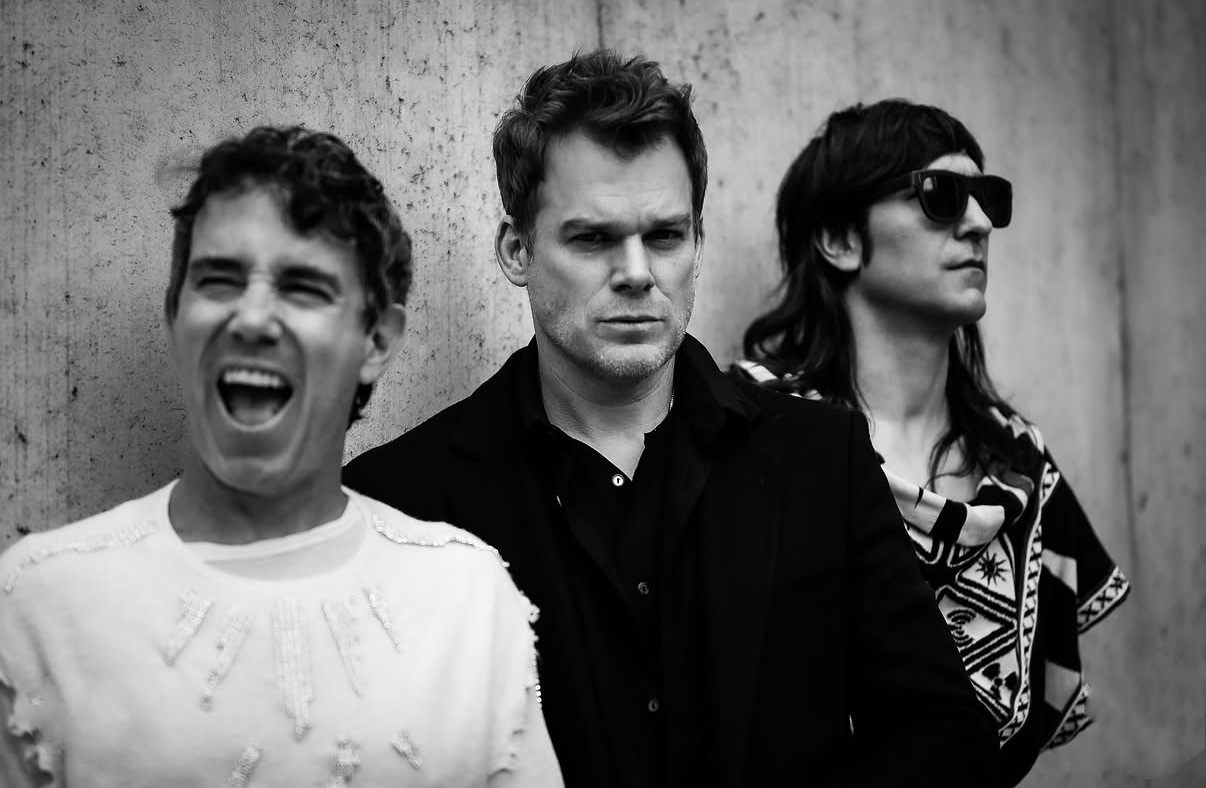
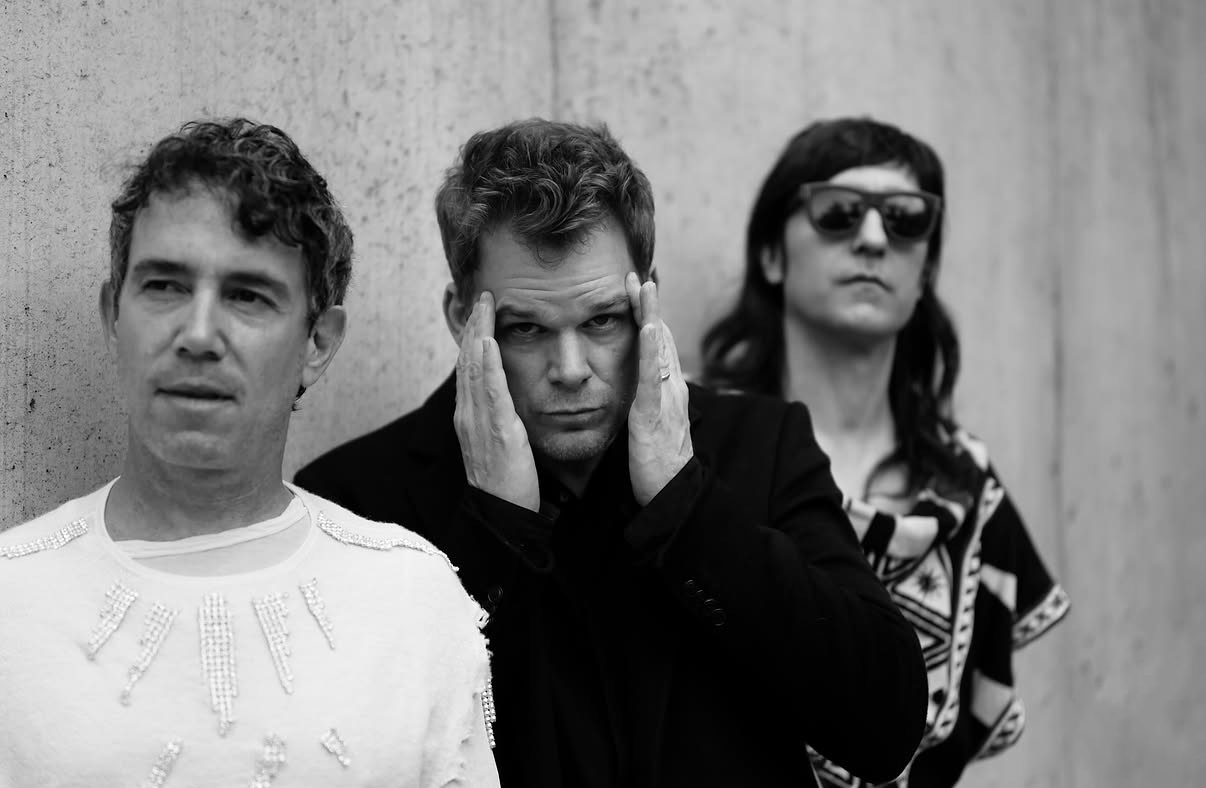
The New York trio comprises Michael C. Hall on vocals, Matt Katz-Bohen on keyboards and synthesizers, and Peter Yanowitz on drums and vocals. Hall is widely known for his acting roles in Dexter and Six Feet Under, as well as his stage work in Hedwig and the Angry Inch. Katz-Bohen has played with Blondie and Cyndi Lauper, while Yanowitz was a founding member and original drummer of The Wallflowers, joining the Los Angeles rock band in its early years and playing on their 1992 self-titled debut. He later went on to play drums on three of Natalie Merchant’s solo records, including Tigerlily, before moving into songwriting and fronting New York band Morningwood. Their different backgrounds feed into a sound that moves between electronic experimentation, alternative rock, synth-pop and dance music without settling into a single genre.
Yanowitz and Hall first connected while performing Hedwig and the Angry Inch on Broadway, where Hall played the title character and Yanowitz was behind the drums. Yanowitz played more than a hundred shows alongside him and came away convinced they should make music together. Their first idea was a more acoustic project, perhaps something in the vein of Sturgill Simpson, a direction that now seems rather distant from the restless electronic rock of Princess Goes.
“When Mike and I did Hedwig on Broadway, I just knew I wanted to be in a real band with him,” Yanowitz says. “We joked about it early on, and almost started a more acoustic kind of band. Think Sturgill Simpson vibe, which in hindsight is pretty funny.”
Their stage relationship had its own quirks, too. In the show, Hedwig was perpetually furious with the drummer for missing his cues. “I played over a hundred shows with Mike as Hedwig, and I knew from hearing him sing every night that his voice was absolutely unreal,” Yanowitz says. “He could do it all: falsetto, full-on rocking, pop, funk.” He adds that the stage dynamic has changed since then: “He doesn't yell at me on stage anymore.”
The band that emerged from those conversations was not simply an extension of Hall's theatrical career. Katz-Bohen brought his experience as a keyboardist and multi-instrumentalist, while Yanowitz brought his own musical instincts and a willingness to explore unfamiliar territory. Together, they began building something that could accommodate all three musicians' ideas, moving between electronic rock, synth-pop, new wave and stranger, less easily categorised territory.
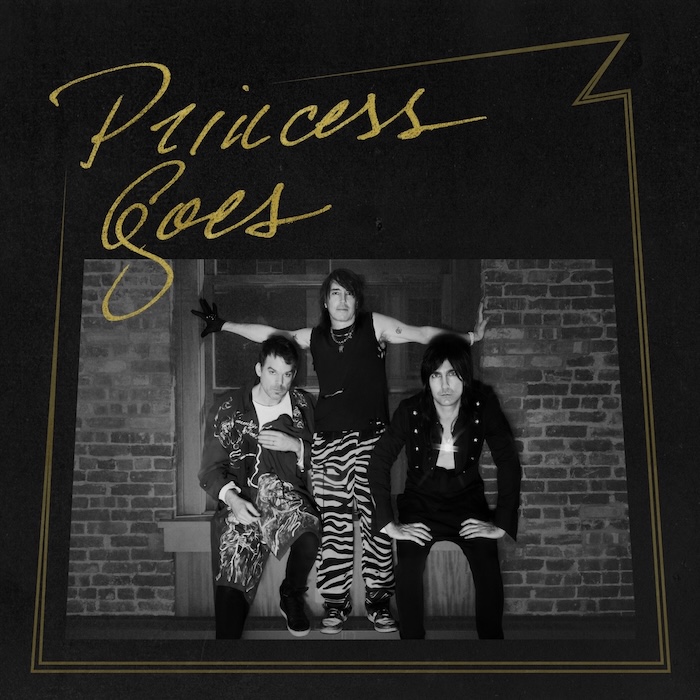
Their early releases established that freedom as part of the project's identity. Now, with 3 due on 30 October via Morpho Music, Princess Goes are approaching their fourth album with a stronger sense of what their songs can become, without necessarily having a fixed idea of what a Princess Goes record should sound like.
One of the biggest differences this time was the decision to leave their own studio. Previously, the trio had self-produced their albums in a small space near Union Square in New York, using whatever equipment happened to be lying around. Electronic drum sounds, loops and beats they found and assembled became part of a deliberately homemade process. Yanowitz describes those records as “super homemade” and “very art-project-like, collage-y”. Pulling everything together themselves was part of the fun.
For 3, the band moved into a small room in Greenpoint, Brooklyn, working with producer Brandon Bost, who had mixed all their previous records. Bost brought his experience as an engineer, a collection of analogue equipment and a musician's understanding of how songs work. Having someone who already knew the band's music, but could hear ways to take it further, changed what was possible in the studio.
“We love all our past albums, but this record feels like a step up sonically,” Yanowitz says.
The difference was not simply about achieving a more polished sound. The recording process gave the band a chance to reconsider the material itself. The album took around 18 months to complete, partly because of the members' competing schedules. Rather than compressing the sessions into a short, intense period, they kept returning to songs that were not quite working, sometimes taking them apart and rebuilding them.
Yanowitz recognises that working quickly can have its own rewards. A concentrated recording period can preserve the energy of an initial idea, before too much consideration gets in the way. Princess Goes took a different route. They had time to follow an idea even if it proved to be the wrong one, then go back and try something else.
“It's all intuitive, really, and some trial and error,” he says. “We're not afraid to go down a road, even if it's the wrong road.”
The extended process sometimes made it difficult to stay focused, but it also meant the band could keep questioning their decisions. For Yanowitz, that was ultimately a benefit. They were able to give the songs the attention they needed rather than accepting whatever had emerged during a limited studio window.
The eleven tracks on 3 came from different points in the band's history. ‘Heart 2 Heart’ and ‘Walking In Soho’ were ideas they had been carrying around for years, while ‘Snaggletooth’ and ‘French Kiss’ took shape during the making of the album. Pulling them together was a matter of finding a sequence in which the songs felt connected, even as they moved across different genres.
Yanowitz is careful not to insist that the record forms a perfectly unified statement. Putting an album together is always a gamble, he says. Musicians collect the songs they have and hope they share a feeling or some kind of flow. Whether that connection comes across is ultimately for the listener to decide.
That uncertainty suits a band whose music rarely stays in one place. ‘French Kiss’ and ‘Heart 2 Heart’ have markedly different rhythmic feels, but for Yanowitz, groove is the starting point from which everything else develops.
“Groove determines a lot: melody, production as well. But the feel of the track is the foundation everything is built on. The attitude. So yeah, groove is everything.”
On 3, that foundation can support very different emotional directions. ‘Sincere Chroma’ is a breakup song, but Yanowitz liked the idea of giving it the energy of dancing on someone's grave rather than allowing it to sit in unambiguous sadness. The contrast creates a different kind of honesty. The music can feel celebratory even when the subject is painful.
The presence of two vocalists gives Princess Goes another way to play with that tension. Yanowitz describes their dynamic as a kind of yin and yang, with one singer leaning towards darkness while the other brings in some light. Rather than assigning each singer a fixed emotional role, the pair can push against each other, allowing different feelings to coexist within a track.
Yanowitz also takes the lead on several songs this time, a development that began with a practical request. Hall's demanding television schedule meant he asked Yanowitz to sing on a couple of tracks. The drummer's first reaction was uncertainty.
“At first I was kinda scared and at a loss, like, what the fuck am I going to sing about?” he says.
Then life supplied an answer. As he began writing, Yanowitz found himself working through things that were happening in his own life. The experience reminded him that songwriting could be therapeutic, and that he had more to say than he had realised.
“In the end I was so grateful Mike asked, as I didn't realise I had that much to say.”
The slow development of Princess Goes has helped make that sort of discovery possible. Yanowitz still thinks of the band as an underground indie project, with a DIY mentality and little sense of operating within the expectations of a conventional music career. The three musicians have spent years creating in their own bubble, following ideas because they wanted to see where they led.
They never expected to reach a fourth album. There was no calculated plan to build an audience, no point at which they decided what the band's next stage should look like. The music came first, and the rest followed.
That does not mean they are uninterested in reaching more people. Yanowitz would love to see the band break out of its cocoon and share its catalogue with listeners around the world. But the gradual growth has given them room to experiment without feeling obliged to make the same record twice.
For now, there are no confirmed plans to tour 3. Coordinating three busy schedules is difficult, and Yanowitz says the cost of touring has risen considerably. He hopes the album will find new listeners and eventually bring the band back in front of audiences, but he wants that to happen when the timing feels right and the music has had a chance to reach people.
Playing live remains important to him for a reason that goes beyond getting the songs onto a stage. He describes the exchange of affection and energy in a room as something beautiful, and hopes that experience will be part of the band's future again.
The release of 3 feels like a milestone precisely because the trio never set out to reach one. For Yanowitz, the achievement lies in three friends starting an art project later in life, discovering that something clicked between them and continuing to make music together.
“Years ago three friends started an art project, later in their lives, and something just clicked,” he says. “We got so hungry to create together and we made a lot of music riding that wave.”
As the release approaches, Yanowitz describes the moment as “icing on a glorious and mysterious cake” that none of them expected to be eating in 2026.
“Who knows what the future holds for these 3 old guys, but it's all been such a gas to get to this point.”
With 3 arriving on 30 October, Princess Goes are not presenting a grand reinvention or trying to define what comes next. They are still doing what they started out doing: making music together, following their instincts and finding out, one record at a time, what else they have to say.