Who Gets Heard in an Industry Ruled by Algorithms? When the Algorithm Stops Listening
Social media can make a band impossible to ignore. But who gets heard, what does virality really mean, and what happens to the artists the algorithm leaves behind?
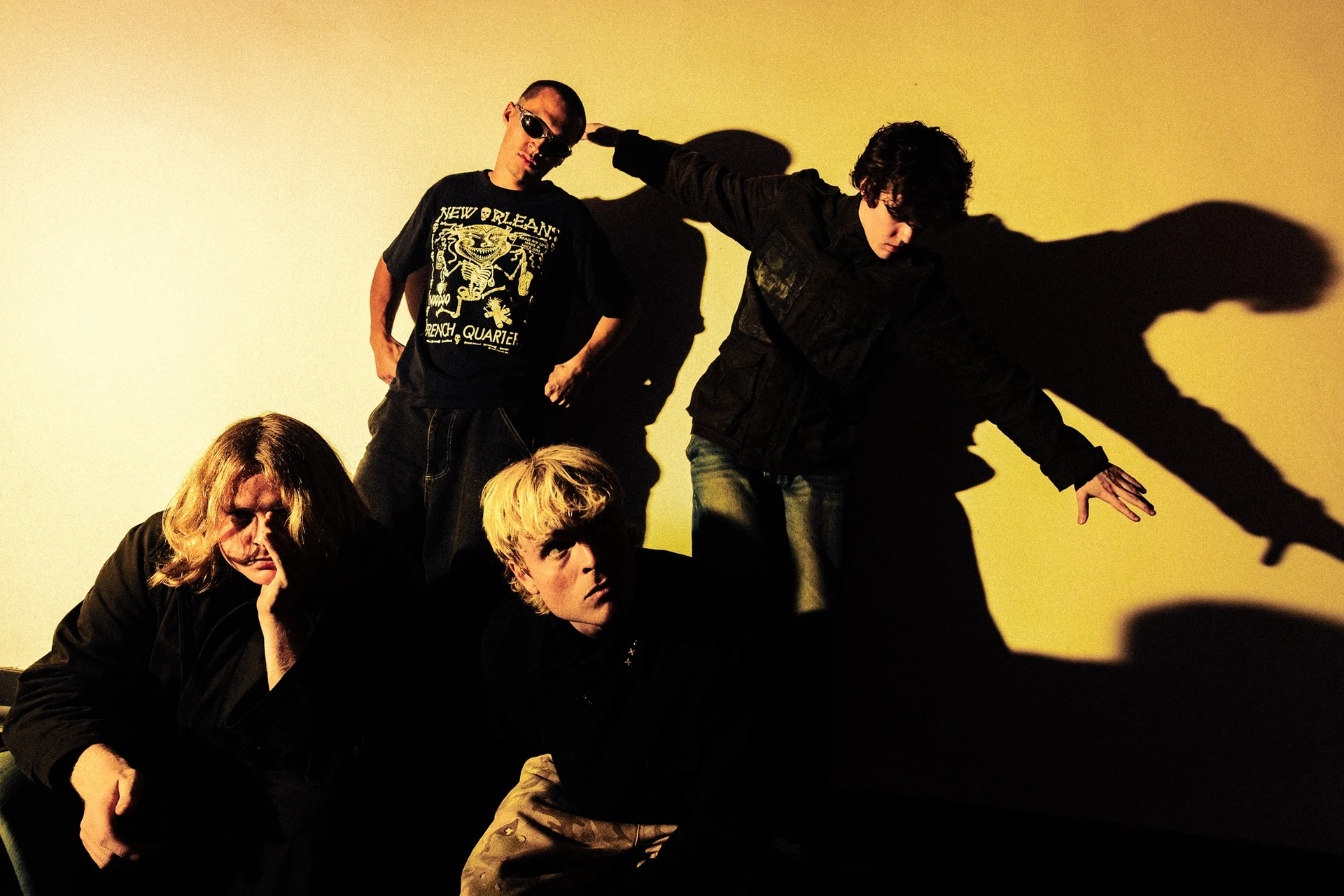
Liam Gallagher recently dismissed Fontaines D.C. as “not good enough” to support Oasis on their Live ’27 tour, adding that they “don’t have any tunes”. The exchange was a familiar bit of rock ’n’ roll provocation, but it also landed in an industry where visibility is increasingly treated as a measure of value. Who gets the biggest stages, who gets talked about, and who gets heard are questions shaped by more than the music itself.
Social platforms have made it possible for artists to reach listeners without waiting for a record deal, radio play or a major publication to take notice. A clip recorded at a gig can travel across the world in hours. An unfamiliar band can find an audience far beyond the venues they have been playing for years.
But the same systems that can put an artist in front of millions of people can make attention feel unpredictable. A video takes off, a song becomes a trend, and suddenly a band is described as the next big thing. What happens when the feed moves on? And how much of that attention turns into people who actually want to hear more?
Angine de Poitrine: when a video escapes its intended audience
Angine de Poitrine have become one of the clearest examples of how quickly an online discovery can travel. The Québécois duo’s KEXP performance, recorded in Rennes during Trans Musicales in December 2025 and published in February 2026, has attracted close to 20 million YouTube views.
The numbers are striking, but the appeal is not easily reduced to a short-form hook. Khn and Klek combine microtonal guitar and bass, intricate rhythms and looping arrangements with polka-dot costumes and oversized masks. Their music is technically demanding and deliberately unconventional. The visual identity gives people an immediate reason to stop scrolling, but there is considerably more to discover once they stay.
The performance travelled well beyond the usual audience for experimental rock. In London, the duo played two sold-out nights at Troxy on 19 and 20 October. The online attention is one part of a much wider rise in interest, rather than proof that a single video can explain every ticket sold.
Their story shows what social media can do well. It can put music that might otherwise remain within a specialist scene in front of people who would never have searched for it. It can make the unfamiliar intriguing enough for someone to press play.
What it cannot guarantee is that every artist will receive the same opportunity, or that the next performance to catch fire will be the one with the most to offer. The ingredients that make a clip travel are not a reliable formula for musical success.
KEO and the manufacture of momentum
KEO’s rise offers a different perspective on the relationship between online attention and an audience built over time.
The band’s early growth was rooted in live shows and word of mouth. As more people went to see them, fans shared footage and discussed the band online, allowing that interest to travel further. Their growing profile was not simply the result of a carefully engineered TikTok campaign.
Frontman Finn Keogh has spoken about the misleading sense of growth that social media can create. Online engagement can look like momentum, but a view or a follow does not necessarily tell a band whether people will buy a ticket, return to another show or listen to an entire release. He has also argued for spending time playing gigs before becoming preoccupied with the demands of social platforms.
That distinction matters. Online buzz can help people find a band, but a live audience offers a different kind of evidence. People have made the effort to turn up, spend time in a room and experience the music beyond a few seconds on a screen.
There is no reason to treat the two as opposites. Social media can amplify word of mouth and give people a way to share what they have experienced. The problem begins when the visible signs of online activity become a substitute for understanding whether an audience is actually developing.
For artists, and for the people making decisions about them, momentum can be difficult to judge when so much of it is measured through numbers that platforms control.
The difference between attention and fandom
MIDiA Research’s 2025 report, All Eyes, No Ears: Why Virality Is Not Building Fandom, examined how people move from discovering music on social media to engaging with an artist more deeply. Its findings challenge the assumption that discovery automatically leads to listening.
Of consumers who followed artists on TikTok after discovering them there, just 26% went on to listen to more of that artist’s music. Among consumers who followed artists after discovering them on other social platforms, the figure was 45%.
These numbers do not mean social media is ineffective. They point to a gap between one action and the next. Someone can watch a clip, follow an account and enjoy participating in a moment without feeling compelled to explore an artist’s wider catalogue.
For a musician, that gap has practical consequences. A post can perform exceptionally well without creating a lasting relationship with listeners. A song can become familiar through repeated use in videos while the artist behind it remains largely unknown. High engagement can be encouraging, but it is not the same as a growing audience that chooses to return.
The distinction also matters for anyone reporting on music. It is easy to repeat the language of a breakthrough when the numbers are impressive. It is harder to know whether the attention represents a change in an artist’s career, a brief moment of curiosity or a combination of both.
When the content becomes the job
The pressure to remain visible has changed the work around making music. Artists are increasingly expected to produce a steady stream of posts, clips, behind-the-scenes footage and material that gives people a reason to keep engaging.
That work takes time, and it does not always sit comfortably alongside writing, rehearsing, recording or touring. Musicians who are already balancing day jobs, financial uncertainty and the logistics of performing must also decide how much of themselves to turn into content.
There is no single answer to how much artists should post. For some, social platforms are an essential route to new listeners and a direct way to communicate with fans. Others may find that the effort required to maintain visibility takes time away from the work they want people to discover in the first place.
Reach can also fluctuate for reasons artists cannot easily identify or control. A post that performs well one week may reach far fewer people the next. When visibility depends on a platform’s changing systems, it becomes difficult to plan around it with confidence.
The danger is not that artists use social media. It is that they can end up organising their work around the demands of a feed, even when the numbers offer little evidence of a lasting return.
Finding music beyond the feed
There are still ways to discover music that do not depend on a clip finding its way into the right algorithmic current.
There is something to be said for walking into a record shop without a particular album in mind, flipping through vinyl, stopping at a sleeve you recognise or one you have never seen before, and asking to hear something unfamiliar. You might leave with a record you had no intention of buying when you walked in. The discovery comes from browsing, curiosity and chance, rather than a system predicting what you are likely to enjoy based on what you have already listened to.
That spirit exists elsewhere, too. Support acts give audiences a reason to arrive early and hear artists they might not have chosen themselves. Independent venues create space for bands to develop in front of people, show after show. Local scenes, recommendations from friends, specialist radio and independent music publications can all direct attention towards artists who have not yet reached a wider audience.
None of these routes is automatically fair or free from gatekeeping. Access to touring, press coverage, good venues and even well-stocked record shops is uneven. But they offer different ways for music to travel, based on more than the ability to produce a post that performs well.
Listeners also have a part to play. Following an artist is a start, not an obligation to become a fan. Listening to a full track, exploring an album, going to a show or passing a recommendation to someone else are ways to move beyond a moment of online interest.
For publications, venues and the wider music industry, the challenge is to avoid treating online visibility as the only credible signal that an artist matters. The next band worth hearing may not be the one whose numbers are easiest to see.
Who gets heard?
Social media has opened doors that were once controlled by a much smaller group of people. An artist can find an audience across borders, outside established genres and without waiting for traditional industry approval. Angine de Poitrine’s extraordinary reach demonstrates the possibilities when an unconventional act finds a much wider audience.
But the possibility of being discovered is not the same as an equal chance of being heard. Platforms reward certain kinds of attention, and their measurements cannot capture everything that makes an artist worth following. A high view count tells us that people watched. It cannot, by itself, tell us what they took away, whether they came back or whether the music will matter to them next month.
The answer is not to dismiss virality or pretend that artists can ignore the platforms where listeners spend their time. It is to look beyond the numbers, and to remember that a music career is not built from one moment of attention alone.
The algorithm may introduce us to a band. What happens after that still depends on the music, the people who make it, and whether listeners decide they want to hear more.