Live Review
Angine De Poitrine at Troxy
Words by The Pit Standard · Photography by Marianne Brits
Angine de Poitrine at Troxy, London — 2026-10-19
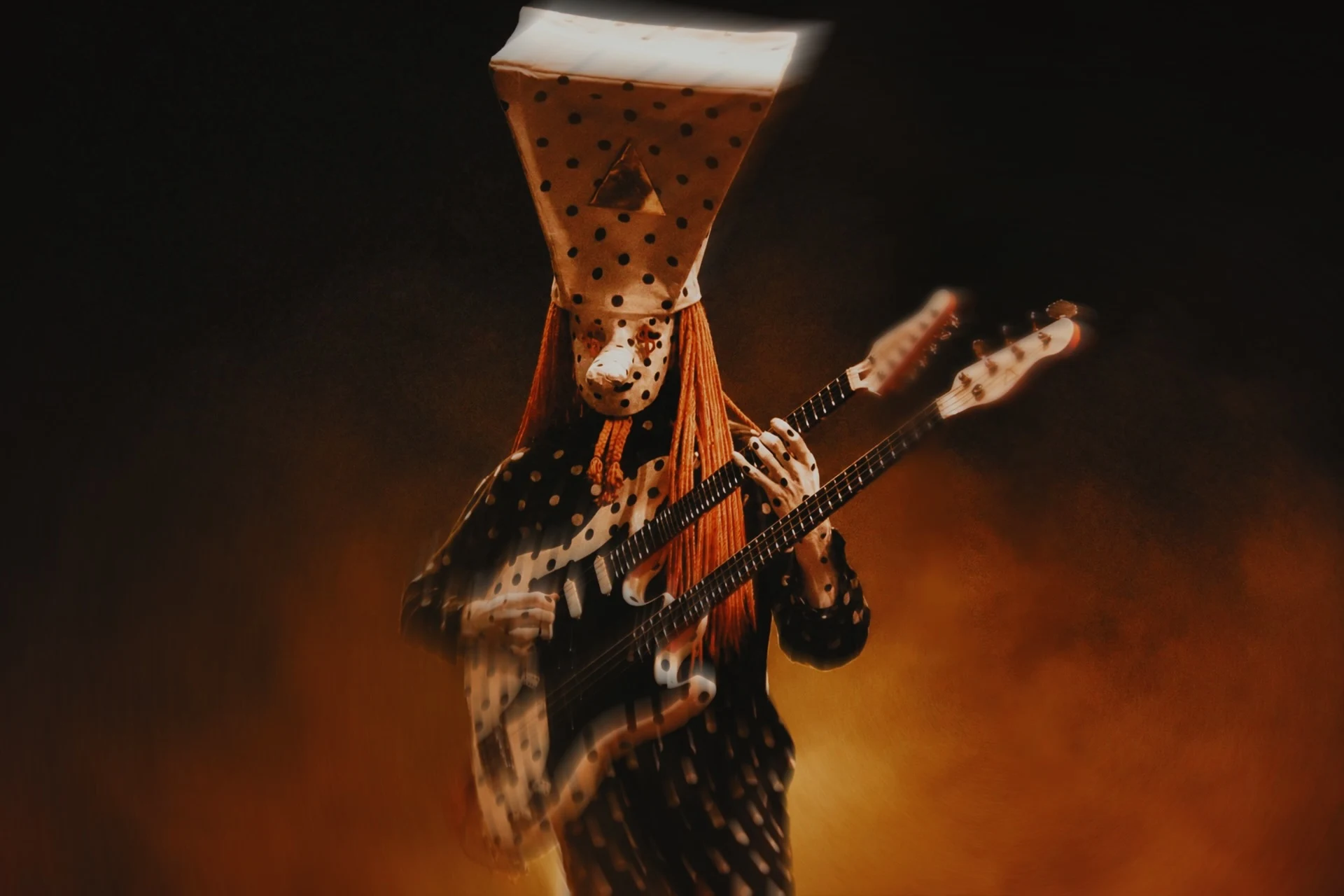
Polka dots had taken over Troxy before Angine de Poitrine even reached the stage. They covered the bathroom mirrors and appeared throughout the crowd, where fans had embraced the band's black-and-white aesthetic. It was an introduction to a project that has built an entire identity around experimental music, absurdist humour and two musicians who prefer to keep their real identities out of the picture.
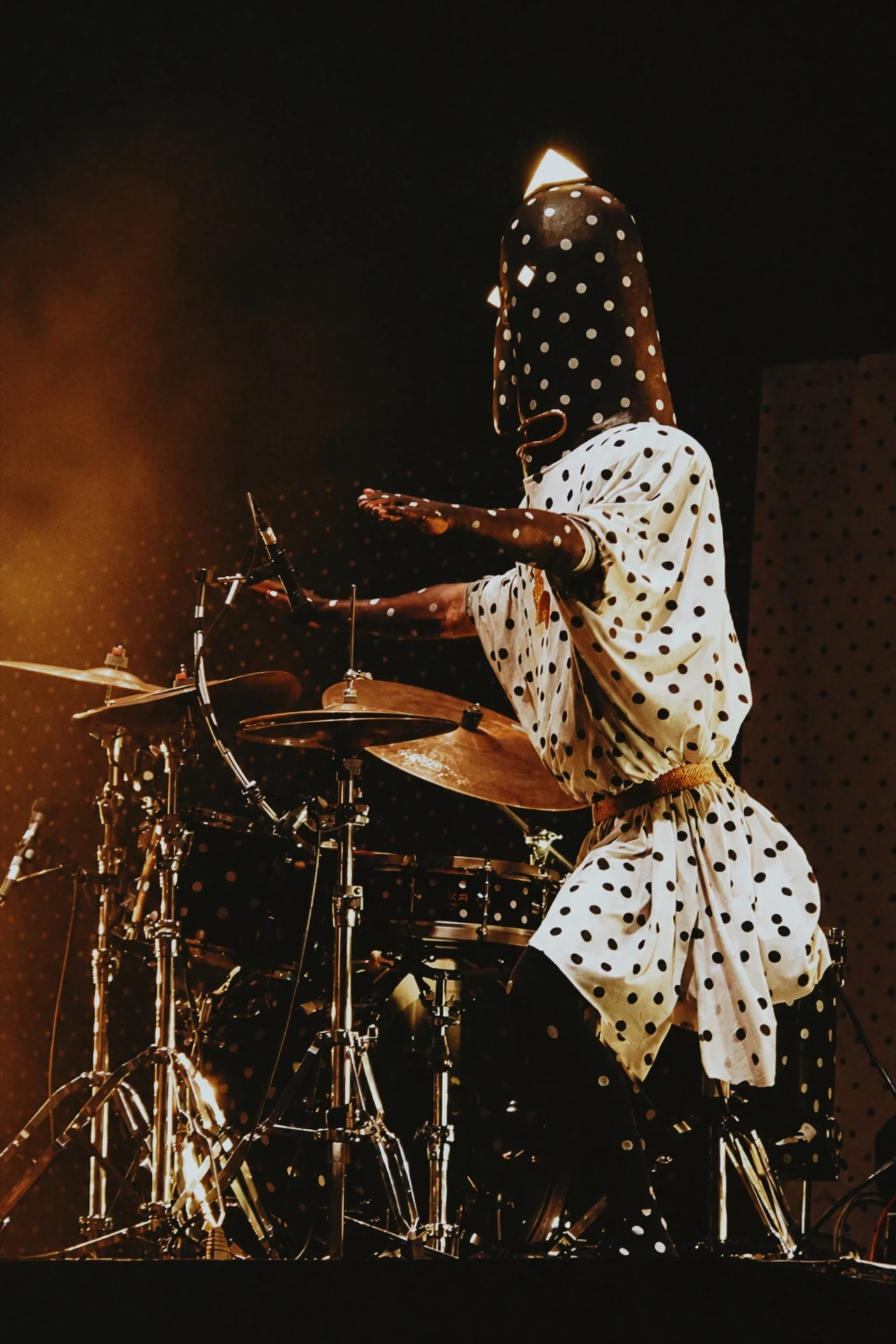
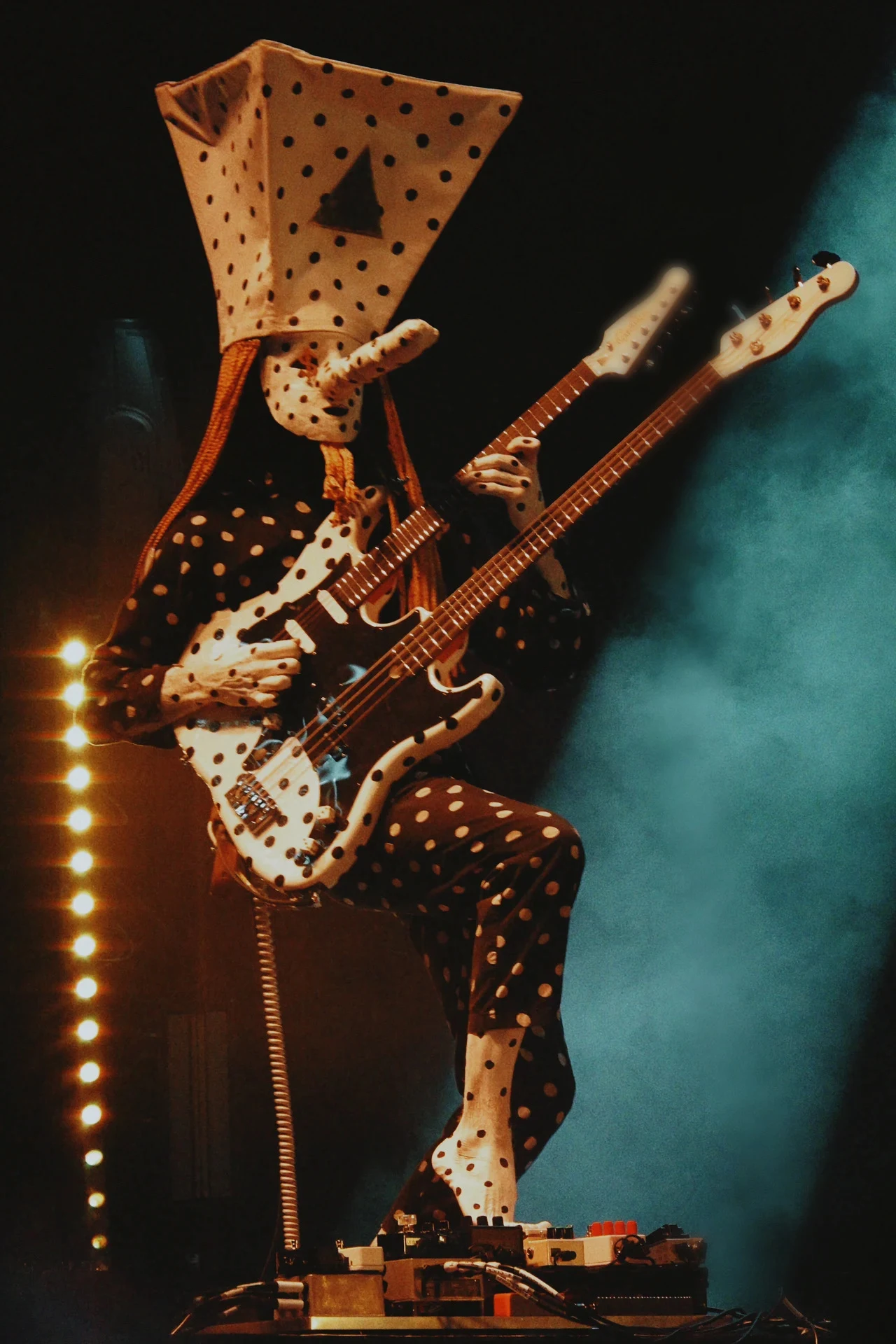
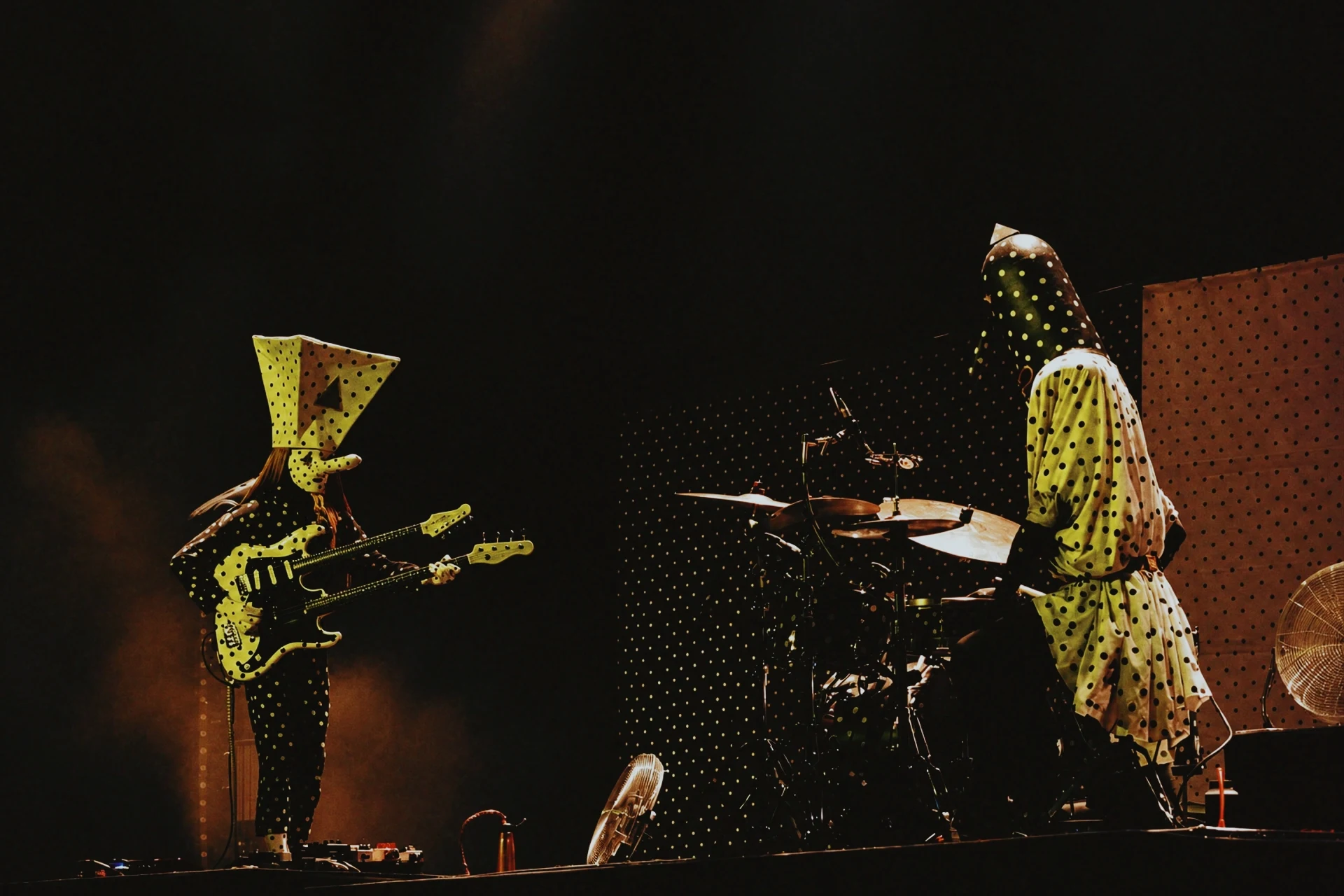
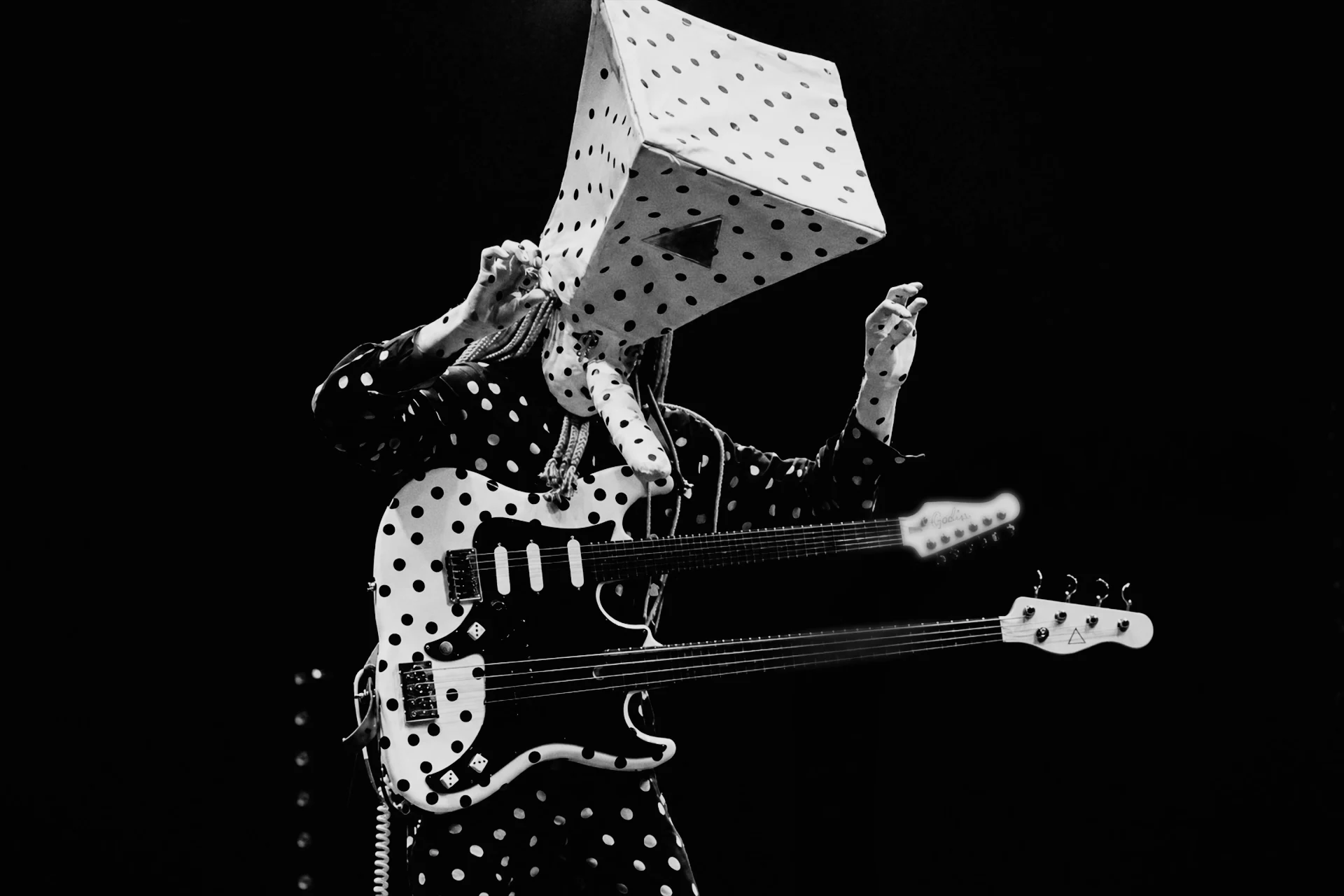
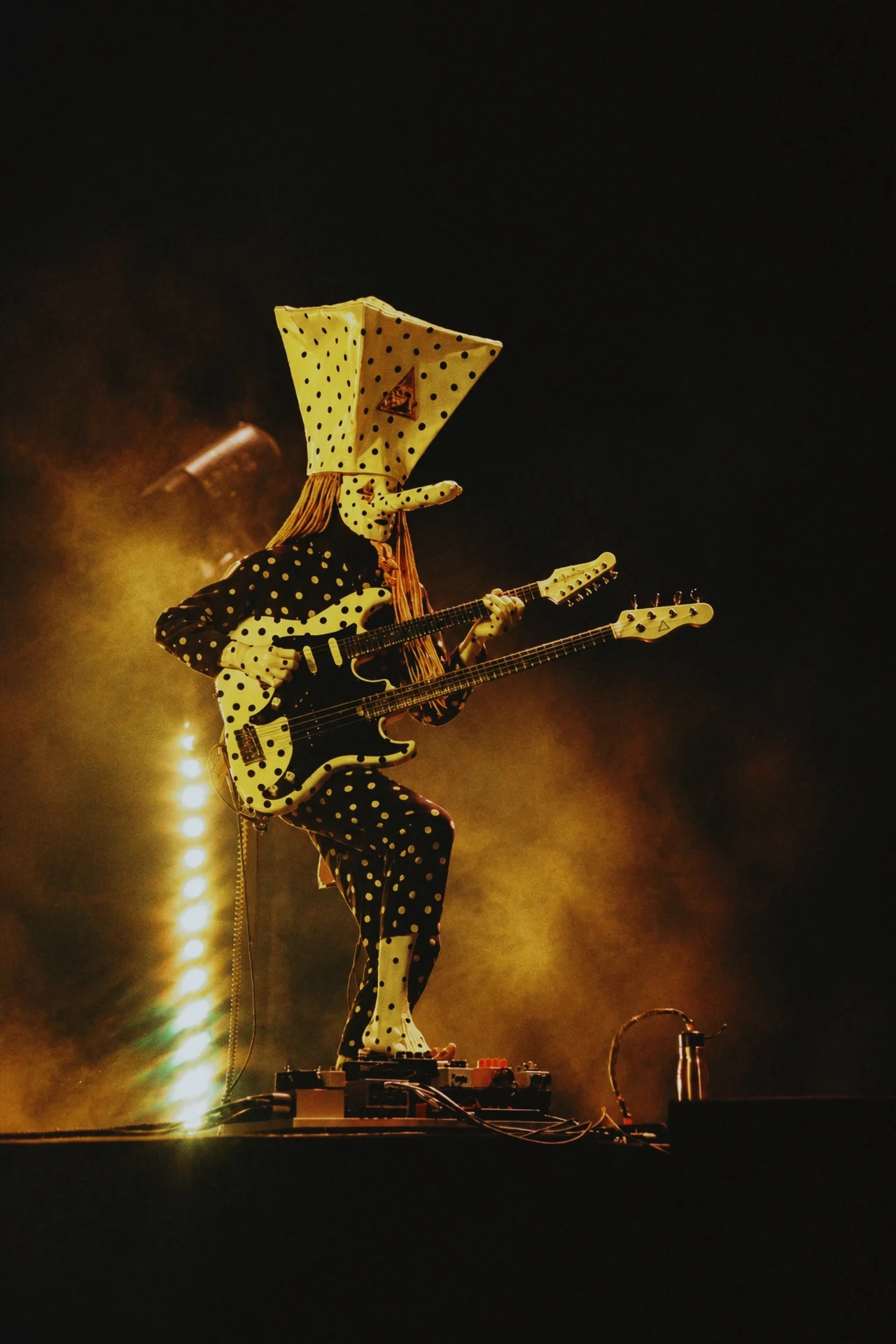
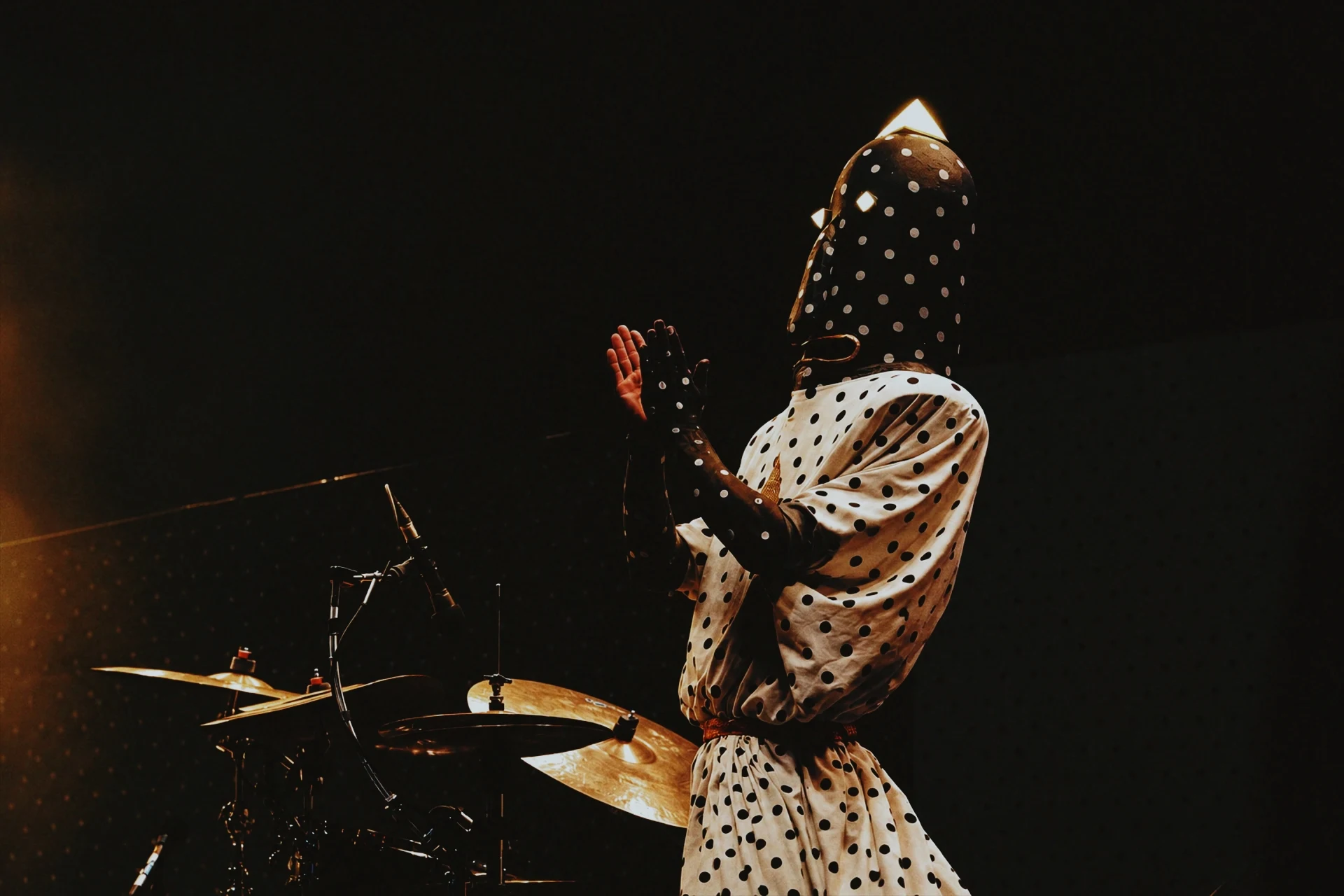
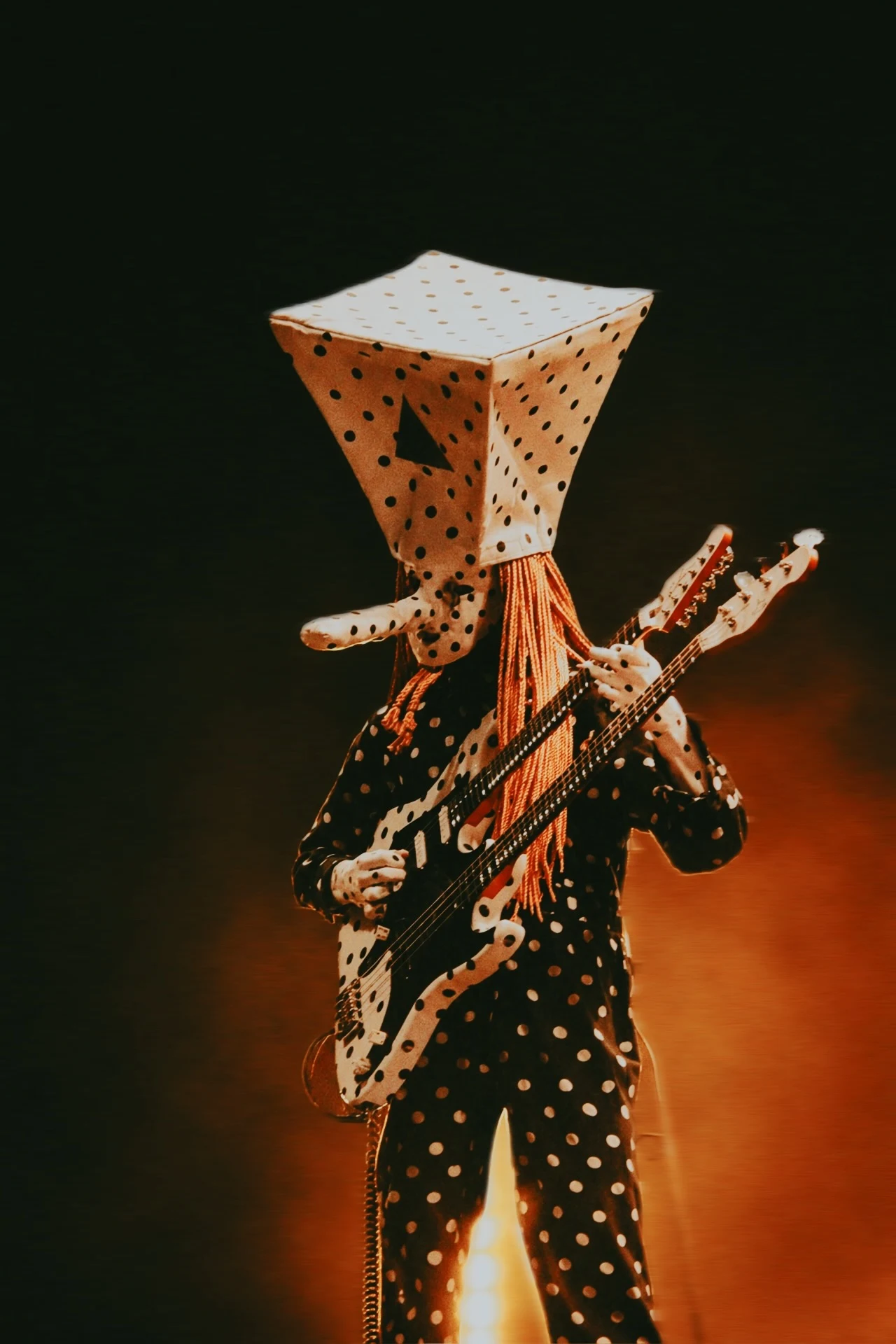
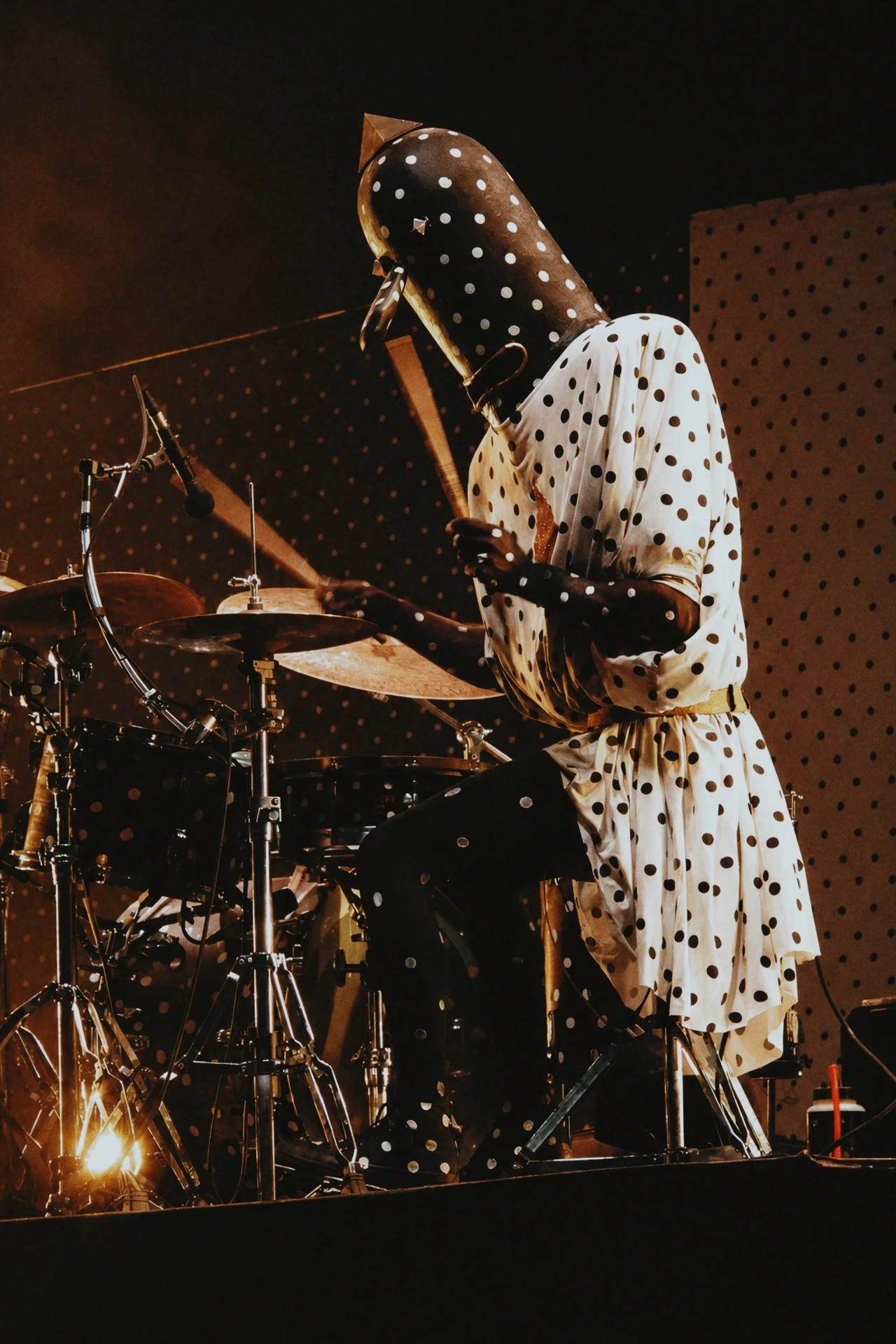
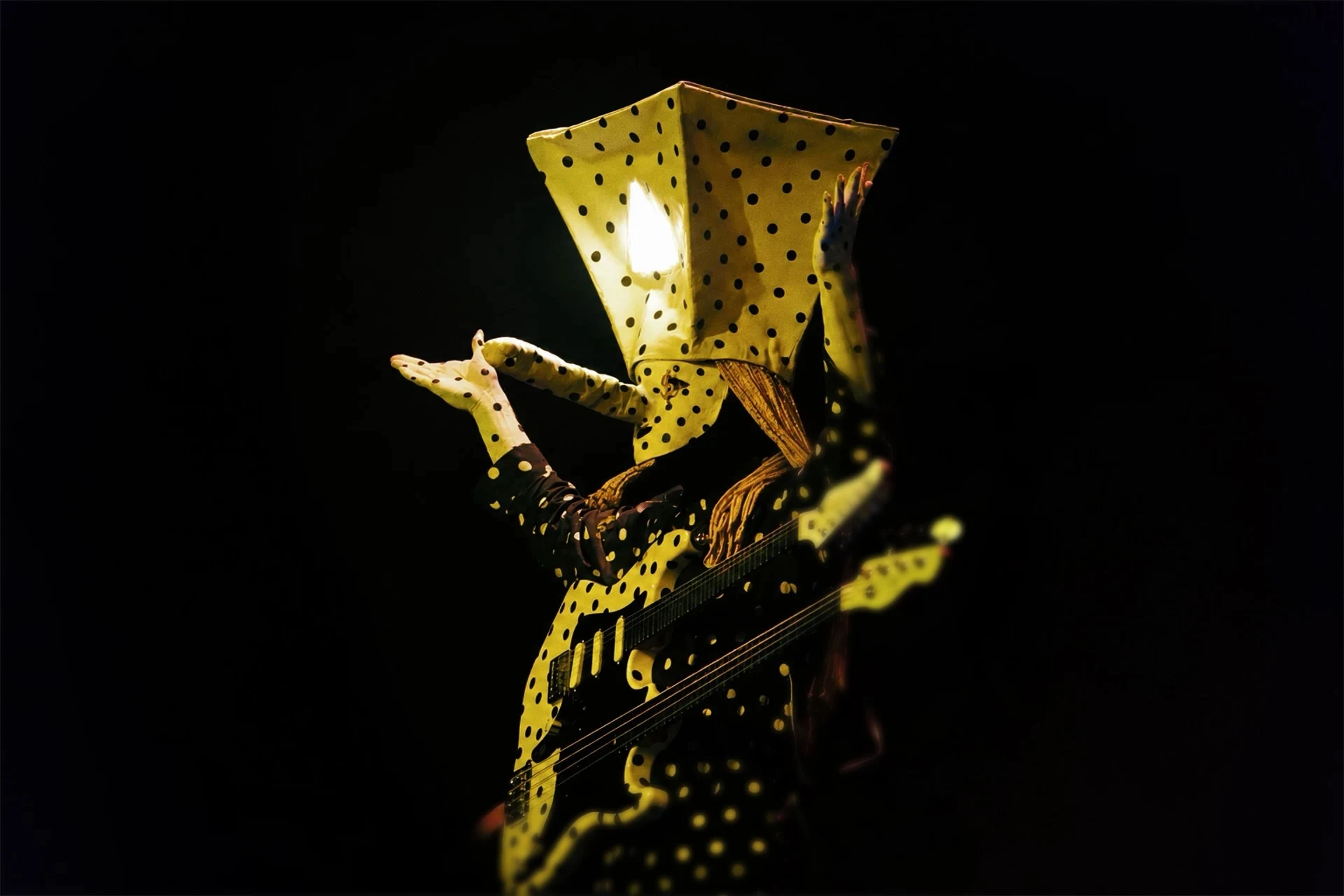
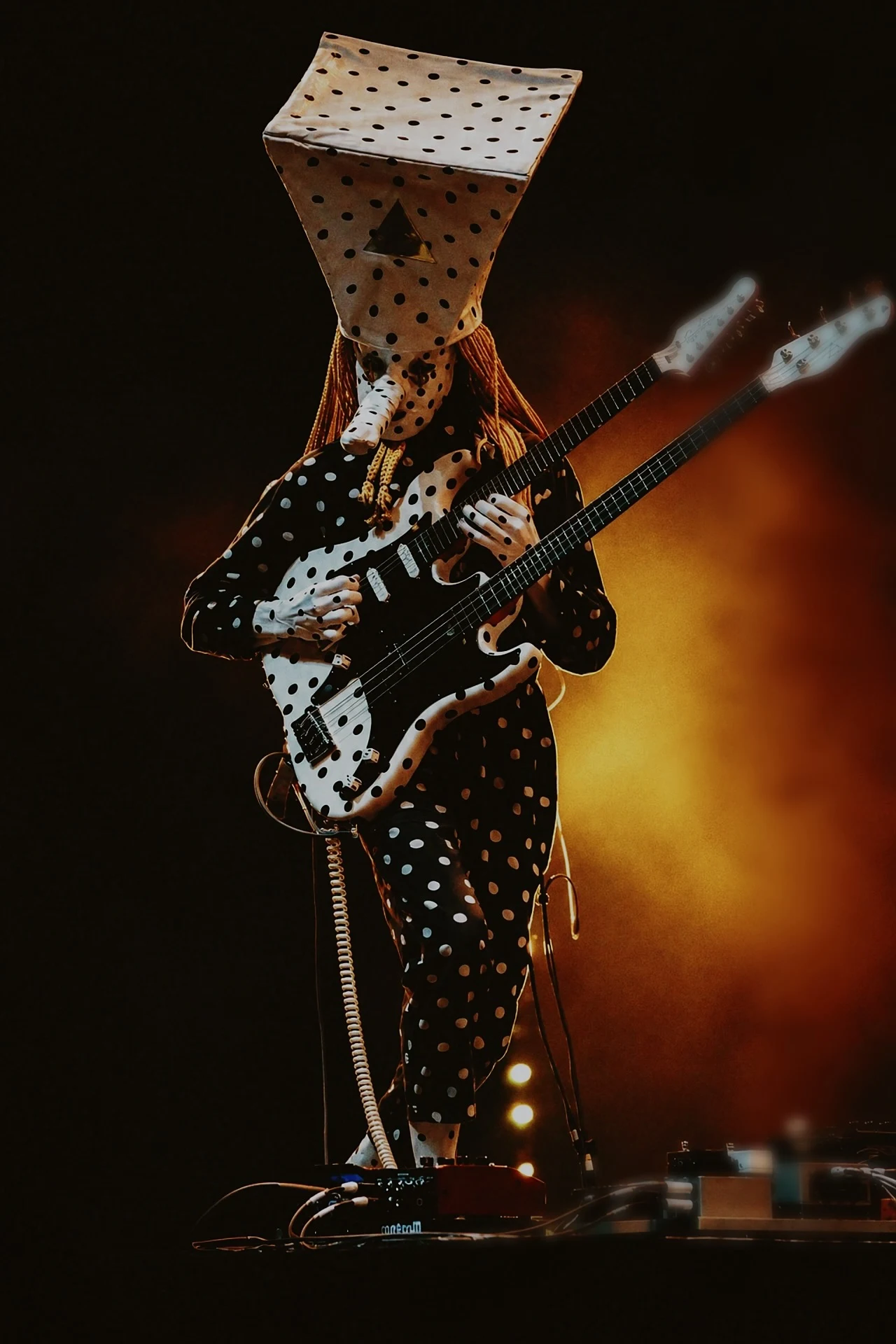
Angine de Poitrine are Khn and Klek, a Québécois duo whose musical partnership stretches back to their teenage years. Their stage characters are supposedly 333-year-old extraterrestrials, complete with oversized papier-mâché heads, exaggerated noses and gold pyramid details. They communicate through strange vocalisations and gestures, maintaining a fictional mythology that extends well beyond their appearance.
The music is just as distinctive. Khn plays a custom double-neck instrument combining guitar and bass, using live looping to build layers of sound in real time. Its microtonal frets allow him to play intervals between the notes used in most Western popular music, giving the riffs an unfamiliar edge. Phrases twist around one another, creating melodies that can sound disorientating on first listen but become increasingly absorbing as the patterns develop.
Klek's drumming is central to the whole construction. The rhythms shift through irregular time signatures and tightly controlled changes, while repeated patterns give the compositions their physical pull. Drawing on math rock, progressive rock and psychedelia, the pair create arrangements that are intricate without losing their sense of groove. There are no conventional vocals to anchor the songs, and little reliance on familiar verse-and-chorus structures. Instead, the music develops through repetition, layering and changes in rhythm that keep the listener guessing.
Tracks such as “Tamebsz” and “Mata Zyklek” demonstrate the appeal of their tightly interlocking rhythms, while “Ababa Hotel” gives Khn's guitar playing room to move between angular phrases and heavier riffs. “Fabienk” is another live highlight, its intricate construction providing plenty for the audience to latch onto. These are compositions that reward attention, but their grooves also make them instinctively physical.
The triangle gesture has become a defining part of the band's identity. Khn and Klek raise their hands to form pyramids, and the audience responds in kind. At Troxy, the gesture spread through the crowd, becoming a shared ritual between stage and floor. The audience had clearly bought into the mythology, and the participation went beyond the hand signals. Mosh pits opened as the music gathered momentum, giving the instrumental passages an energy that might seem unlikely given the complexity of the arrangements.
The visual identity is central to the project. The polka dots, geometric motifs and exaggerated masks are part of the characters Khn and Klek have created, while their anonymity allows them to maintain a separation between their stage personas and private lives. The humour is deliberate, but the musicianship behind it demands serious precision.
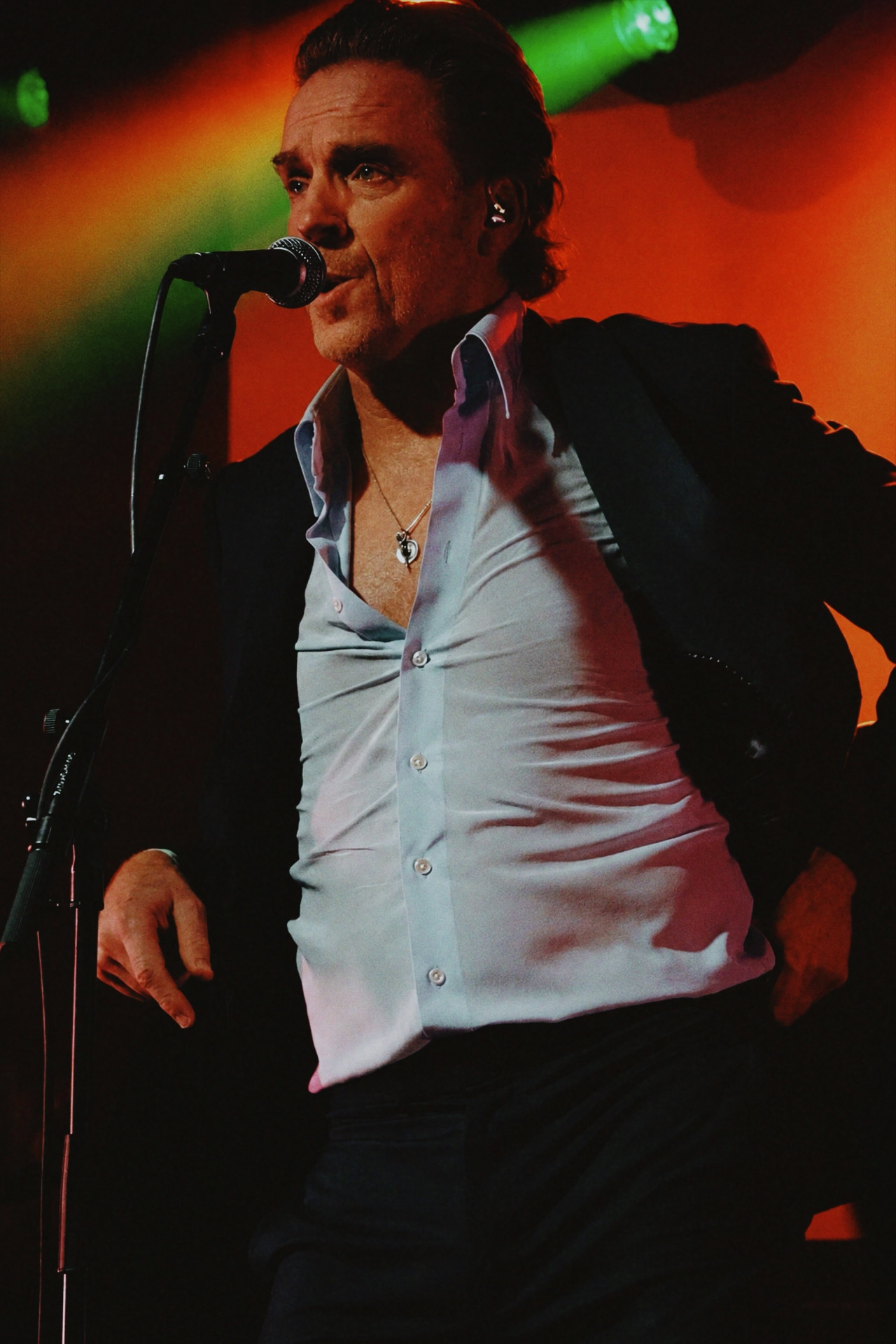
Support act Gros Mené encountered technical problems during their set but handled the interruptions professionally, keeping the performance moving despite the disruption.
Angine de Poitrine take the intricate rhythms of math rock and push them into microtonal, psychedelic territory. At Troxy, the triangles went up, the mosh pits opened and the polka dots spread from the stage into the crowd. The music is technically demanding, but the audience's response showed that understanding the theory isn't a prerequisite for getting caught up in it.
Setlist
Angor / Yor Zarad / Tamebsz / Mata Zyklek / Ababa Hotel / Sarniezz / Fabienk / Sherpa