Album Review
Chelsea Wolfe, ‘The Dark’ Review: Finding Strength in the Shadows
Words by The Pit Standard
There is a different kind of intensity to Chelsea Wolfe’s The Dark. The Californian singer-songwriter pulls back on the distortion that has often enveloped her music, bringing her voice and songwriting into sharper focus. The result is an album that feels more direct without abandoning the gothic atmosphere, uneasy textures and emotional weight that make her work distinctive. Across ten tracks, Wolfe confronts grief, destructive relationships and the difficult process of facing parts of yourself you might rather leave alone.
Rating: 4/5 stars
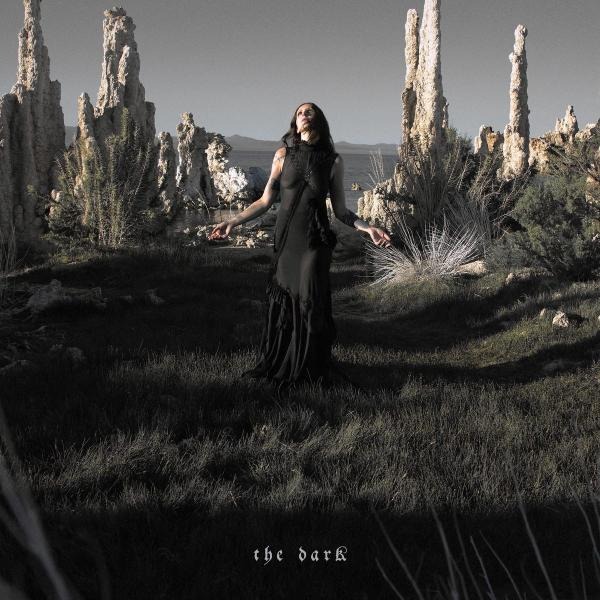
The Dark
Artist: Chelsea Wolfe
Release date: 2026-08-21
Label: Loma Vista Recordings
Listen to The Dark on SpotifyFollowing the electronic textures of 2024’s She Reaches Out to She Reaches Out to She, this record returns to a more guitar-led foundation. Working with longtime collaborator Ben Chisholm and producer Jennifer Decilveo, Wolfe builds songs around guitars, bass, drums and piano, drawing on gothic rock, dark folk and what might be described as doom pop. The arrangements remain carefully considered, but they leave more room for her voice to carry the emotional weight.
Opening track ‘Cold’ establishes the album’s direction through restraint rather than spectacle. Its slow-burning arrangement supports a song about the painful recognition that a relationship has become damaging. Wolfe’s delivery is controlled, but there is a deep ache beneath it, capturing the moment when letting go becomes necessary even if it offers little immediate comfort. The song’s strength lies in its refusal to turn that decision into an easy victory.
‘Seethe’ brings a more physical energy. Its prominent bassline gives the track a steady, insistent groove, while the heavier instrumentation adds an edge that prevents the album’s more accessible direction from feeling too comfortable. Wolfe sounds assured here, moving between restraint and force without needing to bury her vocals beneath layers of distortion. It is one of the record’s most immediate tracks.
The atmosphere becomes heavier on ‘Humours’ and ‘Swallower’, both of which favour slow-building tension over conventional song structures. The arrangements have a doom-laden quality, with the guitars and rhythm section creating a sense of unease that develops gradually. Guest musicians including Robin Finck of Nine Inch Nails and Troy Van Leeuwen of Queens of the Stone Age contribute to the album’s instrumental palette, although the focus remains firmly on Wolfe’s songwriting and performance.
‘Halo’ and the title track sit closer to the album’s thematic centre. Mysticism, memory and the relationship between darkness and personal transformation run through the record, but Wolfe approaches these ideas without making them feel like abstract concepts detached from everyday experience. The darkness here is tied to recognisable forms of pain: grief that refuses to follow a timetable, relationships that leave lasting marks, and the uncomfortable work of confronting your own behaviour.
There is an interesting tension in that approach. Wolfe’s music has often found its power in making the listener feel surrounded by sound, with her vocals emerging from dense, sometimes punishing arrangements. On The Dark, the songs are more exposed. ‘Turn the Key’ and ‘I’m Not There’ lean into this stripped-back quality, allowing her voice to remain at the centre while the instrumentation provides atmosphere rather than overwhelming it. The effect is intimate, although the less elaborate arrangements occasionally lack the unsettling force of her earlier work.
‘Death Is Not the End’ brings a bleakness that feels entirely in keeping with the album’s subject matter, but it is not without a strange sense of reassurance. Wolfe has never needed to make difficult emotions sound pretty to find something meaningful within them. Here, the weight of the music and the measured vocal delivery give the song a solemn quality, without offering an easy answer to the questions it raises.
The closing track, ‘Dancer in the Sky’, takes a more delicate approach. Built around piano, it gradually opens into a more expansive arrangement, allowing the album to finish on a quieter, more reflective note. There is a sense of release, though not necessarily resolution. After a record concerned with recognising painful truths, that feels like a more convincing conclusion than an insistence that everything has been put right.
The main reservation is that The Dark occasionally sacrifices some of the unpredictability that made Wolfe’s earlier work so compelling. Its clearer songwriting and more prominent vocals make the album easier to enter, but some passages feel less distinctive once the initial atmosphere has settled. The balance between accessibility and experimentation does not always land as effectively as it does on ‘Seethe’ or ‘Cold’.
Even so, there is plenty to appreciate here. Wolfe has not abandoned the darker side of her music; she has changed how she approaches it. The strongest songs find their intensity in the performances, the space between instruments and the subjects she is willing to confront. The Dark may not have the same sonic force as her heaviest records, but its more direct approach reveals a songwriter who knows when to let a song speak without surrounding it with noise.