Album Review
Evanescence, ‘Sanctuary’ Review: A Heavier Sound With Plenty Left to Prove
Words by The Pit Standard
Evanescence have never been short of drama, but Sanctuary gives that instinct a harder, more contemporary edge. The guitars hit with greater force, electronic programming pushes into the arrangements, and the songs move between gothic atmosphere and outright aggression. Amy Lee remains the focal point, her voice capable of making even the most densely produced passages feel personal. What makes this album interesting is not simply that Evanescence sound heavier, but how willing they are to change the mechanics of their sound.
Rating: 4/5 stars
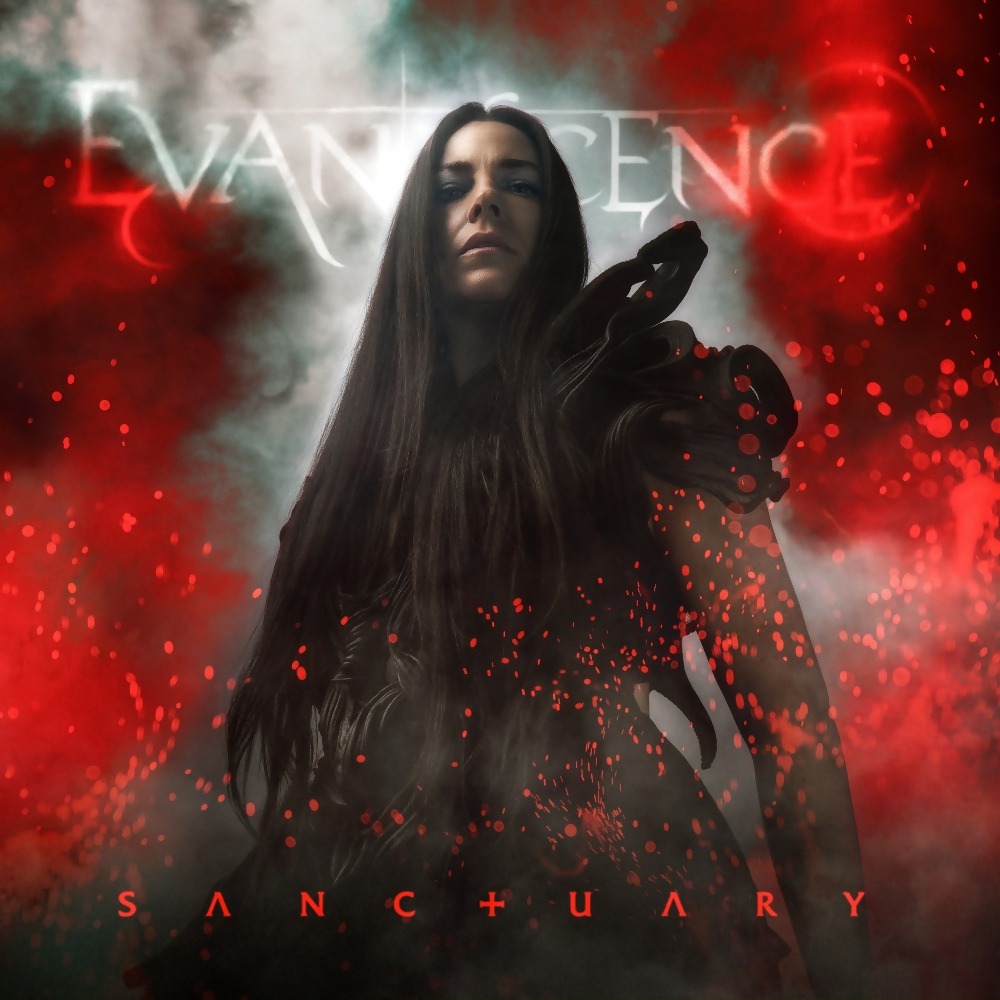
Sanctuary
Artist: Evanescence
Release date: 2026-06-05
Label: BMG / Music For Nations
The influence of producers Jordan Fish, Zakk Cervini and Nick Raskulinecz is audible across the record. Rather than applying one consistent production style to all 12 tracks, the band move between different approaches, from electronic pulses and industrial textures to the more familiar combination of piano, soaring vocals and guitar-driven choruses. That variety gives Sanctuary a sense of movement, even if not every experiment lands with the same conviction.
‘Beautiful Lie’ opens with staggered, fuzz-heavy riffs and electronic details that immediately establish a more aggressive direction. Lee’s vocal cuts through the arrangement with a defiance that feels central to the record. It is a strong opener, setting up the contrast between the band’s familiar melodrama and the harder-edged production that follows.
‘Tell Me When You’ve Had Enough’ is one of the album’s most immediate songs. Its huge chorus brings the emotional scale Evanescence do so well, but the production gives it a sharper rhythmic drive. The result feels designed for a large stage without losing the tension that makes the band’s music more interesting than straightforward arena rock.
That balance becomes more pointed on ‘Who Will You Follow’. Built around a forceful riff and a heavy breakdown, the song takes aim at misinformation and the ease with which people are led away from reality. The subject could easily become heavy-handed, but Lee’s delivery gives the frustration a personal edge. The track also demonstrates how comfortably the band can incorporate modern metal production without losing their identity.
‘Rapture’ takes the electronic side further, introducing textures that feel closer to contemporary industrial and trap-influenced production than the gothic rock that first established Evanescence. It is an unexpected direction, but the shift gives the song its own character. Rather than using electronics as decoration, the band make them part of the track’s momentum, building towards a heavier, more expansive finish.
The previously released ‘Afterlife’, originally written for the Devil May Cry animated series, brings the album back towards cinematic gothic metal. Its darker atmosphere and forceful arrangement suit the band’s established strengths, while the production gives the song a scale that feels natural rather than forced. It is one of the clearest links between Evanescence’s earlier sound and the direction they take across Sanctuary.
The title track is arguably the album’s centrepiece. Glitching electronic details and industrial textures create an unsettled atmosphere before the arrangement opens into something much larger. Lee sounds particularly assured here, navigating the song’s shifts without losing the emotional thread. The production is dense, but the individual elements serve the song rather than competing for attention. It is the point where the album’s different influences come together most convincingly.
‘How Do I Heal’ offers a deliberate change of pace. Built around piano and Lee’s voice, it removes much of the surrounding weight and allows the songwriting to stand on its own. The vulnerability works, particularly after the intensity of the preceding tracks, although the song’s more traditional ballad structure feels familiar beside the album’s bolder experiments. It is a necessary pause, but not one of the record’s most distinctive moments.
‘About Us’ shifts the focus back towards the band’s rhythm section, with a driving bassline and guitars that favour groove over electronic embellishment. It provides a welcome reminder that the heavier sound does not depend entirely on studio effects. The performance has a physical quality that makes the track feel particularly well suited to a live setting.
‘Calm Down’ is less successful. Its slow build and mechanised rhythms establish an ominous mood, but the electronic details occasionally become more distracting than atmospheric. There is a compelling idea here, yet the track never quite develops the tension into a payoff as satisfying as the title track.
‘Self Destruct’ makes a more convincing case for pushing the sound towards modern metalcore. Industrial synthesizers meet heavily down-tuned guitars and an aggressive breakdown, taking Evanescence into territory that would have felt less likely on their earlier records. The contrast is effective because the song still retains the band’s sense of theatricality. The heavier passages are not simply there to prove a point; they give the track a genuine surge of energy.
The closing stretch brings the album back to Lee’s voice. ‘Forever Without You’ builds from piano-led introspection into a sweeping, emotionally charged arrangement, while ‘Wide Open Heart’ begins with a delicate synth figure before expanding into a cinematic finale. Both songs lean into the dramatic balladry that has long been part of Evanescence’s identity. They are effective, though the album’s more adventurous material leaves a stronger impression than its more conventional emotional climaxes.
That is the main distinction running through Sanctuary. When the band combine their gothic foundations with the newer production ideas, the results feel purposeful and occasionally surprising. When they fall back on familiar ballad structures or let the electronic elements dominate without enough development, the impact is less convincing. The record is at its strongest when the different approaches challenge one another rather than simply sitting side by side.
Even so, Sanctuary is a confident step forward. Evanescence have found ways to make their sound heavier and more current without reducing it to a collection of breakdowns and oversized choruses. Lee remains the constant, bringing authority and vulnerability to songs that might otherwise become overwhelmed by their production. Not every track reaches the same heights, but the willingness to experiment gives the album an energy that carries it beyond a straightforward return to familiar territory.