Album Review
U2, ‘Carnaval de Luz’: Experimentation and familiar territory
Words by The Pit Standard
U2’s sixteenth studio album finds the band sounding noticeably more relaxed than they have on some of their recent releases. Their first full-length collection of original material since Songs of Experience in 2017, Carnaval de Luz moves between electronic experimentation, guitar-led rock and country influences, with a brighter, more immediate sound throughout. Produced by Jacknife Lee, the record has moments of genuine energy, although its different approaches don’t always sit comfortably alongside one another.
Rating: 3/5 stars
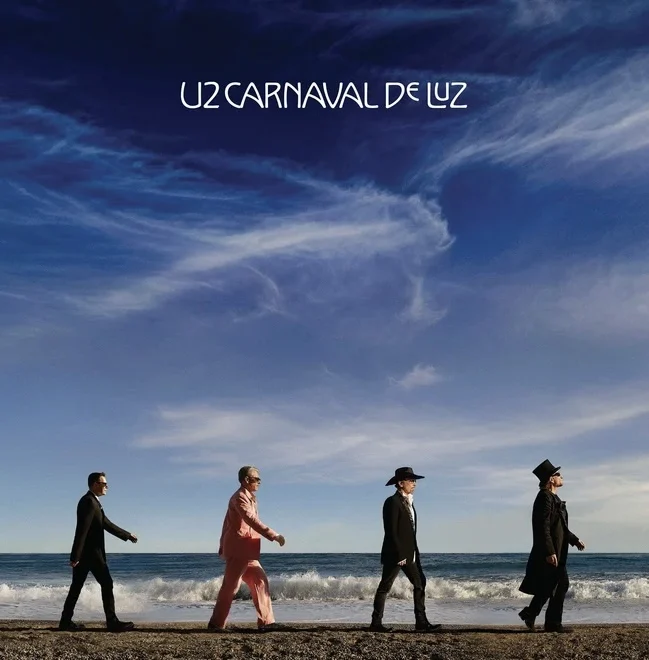
Carnaval de Luz
Artist: U2
Listen to Carnaval de Luz on Spotify“Go (Carnaval De Luz)”, co-written with Brian Eno, sets the tone with pulsing electronics and fragmented synth textures. There are echoes of U2’s early-90s experimentation, but the track feels less interested in recreating a particular period than in finding a fresh starting point. “La Reina” follows with a more direct rock arrangement, Adam Clayton’s bass and Larry Mullen Jr.‘s drums providing a solid foundation for The Edge’s guitar work.
“Street Of Dreams”, released as the first single in July, leans into chiming guitars and an expansive chorus. It’s immediately recognisable as U2, though its uplifting approach feels familiar against the more exploratory material surrounding it. “The Mirror Maker (Rosalía)” takes a more unusual route, pairing flamenco-influenced acoustic guitar with spoken-word passages and a repeated vocal refrain built around Rosalía’s name. Beneath its playful, almost chant-like delivery, the lyrics explore female expression, silenced voices and the freedom to see beyond one’s own reflection. It’s an ambitious idea, and while the repetition can become wearing, the track stands apart from the album’s more conventional material.
“Superficiality” shifts into a loose, funky groove, with Bono turning his attention to modern culture. The arrangement has a playful quality, even if the commentary remains broad. “If The World Is At War We Better Not Be” takes a more earnest approach, built around a message of choosing connection over conflict. Its sentiments are clear, but the track doesn’t distinguish itself as strongly as some of the album’s more musically adventurous moments.
At just over two and a half minutes, “Silencio” is a sharp change of pace. Its rough-edged guitars and surf-punk energy give it an urgency that cuts through the album’s more expansive arrangements. Bono’s fragments of Spanish add to its character without overstaying their welcome. It’s brief, but one of the record’s more effective diversions.
Brian Eno returns as a co-writer on “The Greatest Show On Earth”, a slower, more atmospheric track reflecting on love, performance and U2’s own history. It gives the band space to build gradually, with the arrangement carrying much of the emotional weight. “Glorify”, co-written with Martin Garrix, brings dance-pop influences into the mix, pairing electronic production with Bono’s more spiritual and romantic themes. “Midnight Sunshine” is more straightforward pop-rock, while “Can’t Stop Us Now”, another Eno collaboration, returns to the album’s themes of optimism and endurance. Both have an accessible quality, although neither makes quite the same impression as the record’s more distinctive moments.
The closing track, “Torn”, features Dolly Parton in what became her final recorded vocal performance. A country-rock arrangement, complete with pedal steel and church organ, gives the duet a different character from much of the album. Bono and Parton address broken family relationships, and the subject matter lends the track a personal weight. Parton’s contribution gives the song added significance, making it a particularly affecting end to the record.
What makes Carnaval de Luz difficult to pin down is the gap between its more adventurous ideas and its reliance on familiar U2 territory. The band are clearly enjoying the freedom to move between styles, and the album is at its most compelling when those influences genuinely change the feel of a song. Elsewhere, the familiar anthemic approach takes over, bringing the record back to ground U2 have covered many times before. The contrast gives the album some interest, but also makes it an inconsistent listen.
That inconsistency becomes more noticeable as the album progresses. Some of the bigger choruses feel predictable, while the broad optimism running through several tracks can become rather relentless. The shifts between experimental arrangements and more conventional material don't always feel natural, and the record loses momentum in places. At 12 tracks, it also feels longer than its strongest ideas can sustain.
Carnaval de Luz has enough interesting moments to make it worth hearing, particularly when U2 step outside their usual approach. But those moments are balanced by material that feels much more familiar, and the album never quite finds a convincing identity of its own. It's an engaging experiment in places, but an uneven record overall.