Album Review
Violet Grohl, ‘Be Sweet to Me’ Review: The Influences Outshine the Songs
Words by The Pit Standard
Violet Grohl knows the appeal of a distorted guitar, a sweet melody with something unsettling underneath it, and a vocal that can turn abrasive without losing its tune. Be Sweet to Me draws heavily on the alternative rock of the 1990s, moving between grunge, fuzzy guitar pop and hazier, more introspective passages. The ingredients are promising, and Grohl has the voice to make them work. The difficulty is that the album too often leaves the impression of a musician assembling the sounds she loves rather than finding a compelling reason to put them together.
Rating: 2.5/5 stars
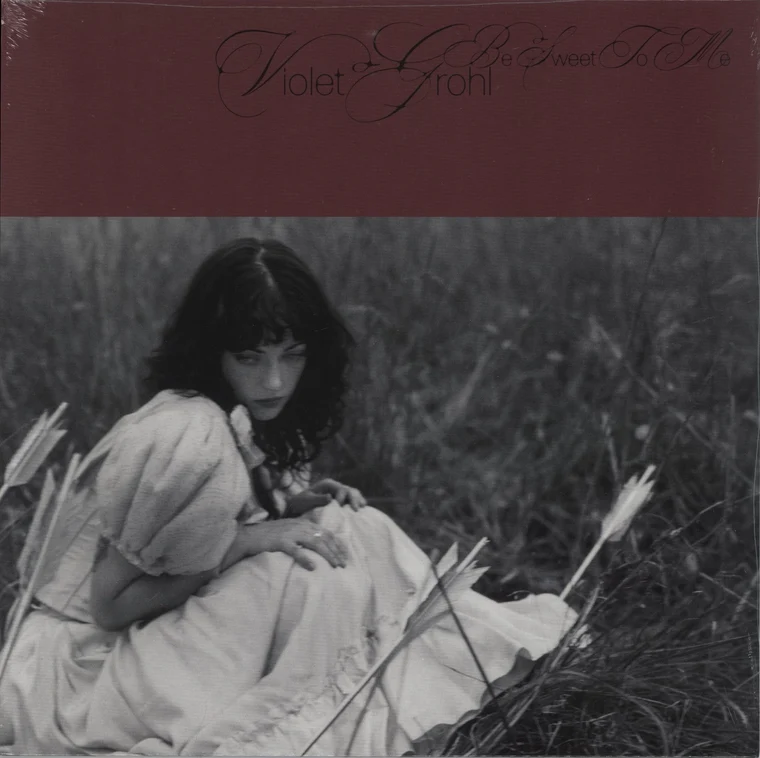
Be Sweet to Me
Artist: Violet Grohl
Release date: 2026-05-29
Label: Auroura Records / Republic Records
The inevitable attention surrounding Dave Grohl’s daughter makes it tempting to frame this debut as a test of whether she can establish herself independently. That is not particularly useful as a measure of the music. The album should be judged on its own songwriting, and there are moments when it suggests a talent worth following. Grohl has a flexible voice, a feel for melody and a willingness to move between styles. What she lacks here is consistency, particularly when a promising musical idea needs to become a memorable song.
“THUM” gets things moving with fuzzy, distorted guitars, bass and drums, while Grohl shifts between a clear melodic delivery and a rougher vocal edge. At just over two minutes, it is a punchy introduction that establishes her taste for the collision of sweetness and abrasion. The performance has energy, but the song is more effective as a statement of intent than as a fully formed introduction to her own musical identity.
“595” keeps the guitars prominent but introduces a darker, more peculiar streak. The riff has a deliberately unsettling quality, while Grohl’s deadpan delivery gives the song a character that sits somewhere between hard-edged alternative rock and offbeat pop. There is a hook beneath the distortion, and the contrast works in its favour. Yet the track still feels closely tied to a familiar musical vocabulary, with its attitude doing more to distinguish it than the writing itself.
“Bug in the Cake” is one of the album’s livelier tracks. Its urgent, upbeat rock arrangement supports a strange story involving a haunted house, giving Grohl an opportunity to show a more playful side. The supernatural imagery adds personality to a song that might otherwise be straightforward punk-leaning guitar rock. It is an effective combination, even if the frantic delivery occasionally carries more weight than the lyrical ideas.
“Last Day I Loved You” slows the pace into melodic, mid-tempo grunge. Grohl’s voice suits the more restrained arrangement, and the guitar work gives the song enough weight to avoid becoming a conventional ballad. The problem is that its emotional premise feels more familiar than revealing. The performance communicates sadness, but the writing does little to make that feeling specific to this song.
“Big Memory” opens around a steady drumbeat, with the guitar work becoming the defining feature as the track develops. Its melodic chorus offers a brighter contrast to the heavier material, and the song has an ease that makes it one of the more immediately accessible moments on the record. It also illustrates the album’s central frustration: Grohl can find a strong melodic shape, but the song never quite develops that promise into something that stays with you.
“Mobile Star” moves into more atmospheric territory. Layered guitars, keyboards and light electronic elements create a spacey backdrop for Grohl’s softer, more delicate vocal delivery. The contrast is effective, and the song hints at a more distinctive direction than the album’s more conventional grunge material. Rather than relying entirely on volume, it allows texture and vocal restraint to carry the mood. It is among the more intriguing tracks here, though its atmosphere is stronger than its sense of progression.
“Often Others” brings the weight back through a slow-moving, double-bass-driven attack and dark vocal harmonies. The arrangement has a restrained intensity, drawing on the heavier side of 1990s alternative rock without simply racing towards a loud chorus. Grohl sounds comfortable with the material, and the groove gives the track a presence that some of the album’s shorter songs lack. It is one of the more convincing examples of her influences working in service of a performance rather than overwhelming it.
“Applefish” uses a gentler vocal approach against a heavier instrumental backdrop. That tension between softness and distortion is one of Grohl’s more promising instincts, and the track shows how much she can do without relying on a forceful delivery. The arrangement shifts the emphasis between voice and instrumentation, but the song still feels underdeveloped. It has a clear sonic identity, yet it stops short of turning that identity into a strong emotional or melodic payoff.
“Cool Buzz” is more direct, with a snarling, punkish energy and a sharper sense of purpose. Its criticism of men who profess progressive values while excluding women from music scenes gives the track a subject beyond youthful defiance. The bluntness suits the song, and the performance has the conviction needed to carry it. It is a welcome reminder that Grohl is capable of giving her attitude a concrete target, even if the track does not move far beyond its initial impact.
“Pool of My Dreams” takes the album into dreamier territory. Soft percussion and a hazy, indie-leaning arrangement create a hypnotic feel, with Grohl’s quieter vocal giving the song a sense of distance from the heavier tracks around it. The change of pace is welcome, and the melody has an understated appeal. But the atmosphere remains the main attraction. The song drifts pleasantly without developing into one of the album’s more substantial moments.
“Plastic Couch” closes the record with its most pronounced change in scale. It begins as a folk-leaning ballad, placing Grohl’s voice at the centre before the guitars and drums build towards a much heavier instrumental finale. The transition gives the song a sense of direction that several earlier tracks lack, and the final stretch brings a welcome intensity to the album’s closing minutes. Shane Hawkins plays drums on the track, but its strength comes from the arrangement itself, which allows the quieter opening to make the heavier ending feel earned.
Across these 11 songs, Grohl demonstrates that she can move between grunge, punk, atmospheric rock and dreamier material without losing her vocal identity. That is a solid foundation for a debut. The difficulty is that the variety does not consistently translate into individuality. Too many tracks announce their influences before revealing much about the person behind them, and several promising arrangements fade before their central ideas have had time to develop.
The album’s production gives the guitars and vocals room to register clearly, and the performances have a live quality that suits the material. But clarity is not the same as character. The strongest songs are those where Grohl’s stranger lyrical ideas or the contrast between her voice and the instrumentation gives the familiar sound a different angle. Elsewhere, the record settles too comfortably into the conventions it draws from.
Be Sweet to Me is not a failure, nor does it need to be judged against the impossible expectation that a debut should immediately establish a new musical language. There is talent here, particularly in Grohl’s vocal range and her instinct for contrasting melody with distortion. Yet those strengths are scattered across an album that has not fully worked out what it wants to say beyond its affection for the music that came before it.
At 2.5/5, this is a mixed first statement: enough worthwhile ideas to suggest that Violet Grohl could develop into a compelling songwriter, but too many familiar turns and underdeveloped songs to make the album a convincing arrival. The next step is not to abandon these influences, but to make them sound less like a starting point and more like her own.
Artist: Violet Grohl