Album Review
Queens of the Stone Age, Perfecth: The sound of letting go
Words by The Pit Standard
Queens of the Stone Age have always understood that a great rock song needs more than a great riff. Their best work has a peculiar tension to it, with grooves that feel slightly unstable, guitars that threaten to turn ugly and Josh Homme’s dry delivery keeping everything just shy of collapse. On Perfecth, the band test what happens when that tension comes from somewhere other than volume.
Rating: 4/5 stars
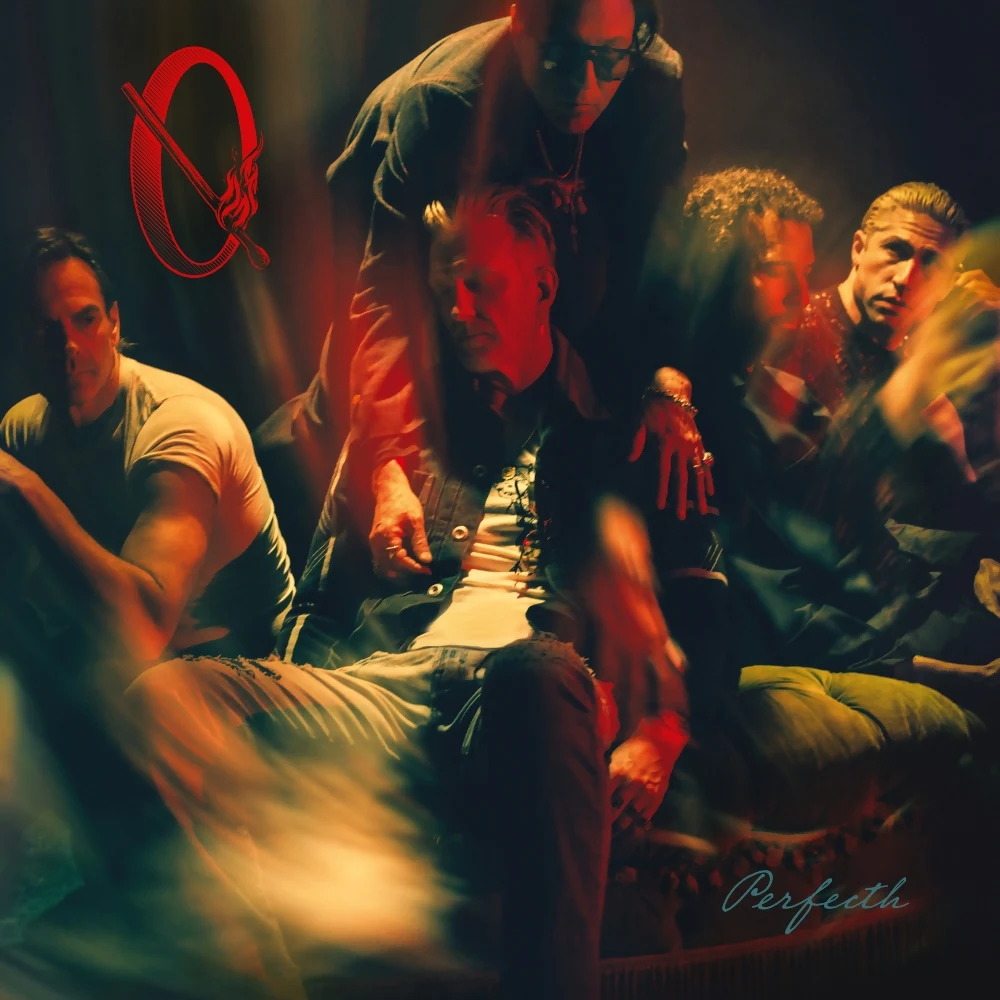
Perfecth
Artist: Queens of the Stone Age
Listen to Perfecth on SpotifyAcross their ninth studio album, the familiar heaviness becomes one colour in a much broader palette. Acoustic guitars, orchestral strings, funk and country influences all have a place here. The shift makes sense for a record preoccupied with love, loss and imperfection, but stripping back the distortion also strips away some of the band’s natural protection. Without the noise to hide behind, the songs have to stand on their own.
The opening “It’s Only Love” establishes that vulnerability with a lo-fi acoustic recording and the rumble of passing trains. Homme’s description of love as a “greasy rope” is hardly a conventional declaration of devotion. It suggests something you cling to even when it might pull you under. When the strings swell into a huge orchestral crescendo, the arrangement threatens to overwhelm the intimacy of the opening. Yet that tension between a damaged, almost private recording and the grand gesture that follows is precisely what makes the track interesting. The song wants to believe in love without entirely trusting it.
That uncertainty is more persuasive when the band find a groove to carry it. “Insignificant Other” drifts into soulful, disco-tinged territory, its bassline doing much of the heavy lifting while the guitars add detail around the edges. There is a bitter irony in how inviting it sounds. The track could easily have become an exercise in retro styling, but the band keep it loose enough to feel lived-in. It is one of the clearest demonstrations that QOTSA’s identity has never depended on distortion alone.
Then “Where The Goth Girls At?” arrives with a swampy riff and enough guitar squeal to drag the album back towards the band’s more recognisable territory. Its camp swagger is a welcome interruption, not least because it exposes a weakness in some of the quieter material: restraint is only compelling when there is something beneath it. Here, the heaviness has personality. The riff is not simply loud; it has a sense of humour and menace that the album’s more polished arrangements sometimes lack.
The problem is not that Perfecth experiments. It is that some experiments feel more complete than others. “Mono” is built around disorientating production, clattering percussion and strange synth attacks, with the sound shifting from mono to stereo. The effect is striking, but the track can feel like a demonstration of what the studio can do rather than a song that demands to be heard again. QOTSA have always enjoyed taking familiar rock structures apart. The difference here is that the pieces do not always come back together.
The quieter songs reveal the other side of that gamble. “From The Cliff” pares everything back to finger-picked guitar and an exposed vocal, leaving little room for the band’s usual armour. Its simplicity fits the album’s interest in vulnerability, although the song never quite develops the emotional weight its arrangement promises. “Phantom Limb” finds more substance in absence, drawing on the rawness of acoustic grunge rather than building towards a conventional release. These moments suggest a band willing to sit with discomfort. They also show how difficult it is to make understatement as compelling as the tension they have spent decades perfecting.
“Sunday”, originally co-written with Iggy Pop for Post Pop Depression, brings a theatrical, mid-70s glam feel to the album. Jon Theodore’s drumming gives it a danceable pulse, while the guitar lines add bite to its sleek, rolling groove. There’s a confidence to the arrangement that makes the song feel effortless without becoming predictable. “Easy Street”, featuring Nikki Lane, is rougher around the edges, pairing acoustic guitar with the contrast between Lane’s and Homme’s vocals. Their interplay gives the song a lived-in quality, adding tension to its uneasy portrayal of a relationship caught between affection and resentment. Both tracks stand out because their arrangements bring something specific to the songs, rather than relying on style alone.
That distinction matters most on “Run Away From The Mob”. The song begins with a measured pulse, letting the tension accumulate before the distorted guitars finally break through in the closing stretch. The eruption is all the more effective because the album has spent so long holding back. It is not just a welcome return to heavy guitars; it makes a case for what the band can achieve when restraint and release are placed in deliberate opposition. The lyrics evoke the cruelty of collective judgement, giving the closing burst an uglier edge than a simple return to rock bombast would provide.
Perfecth is at its best when its contrasting impulses sharpen one another. The funk on “Insignificant Other” makes the bitterness more apparent; the grand orchestration of “It’s Only Love” complicates the intimacy of its opening; the final surge of “Run Away From The Mob” feels earned because the band have made us wait for it. At other points, the album seems to mistake a different sound for a fully realised idea. Some of the acoustic material is affecting, but some of it lacks the friction that gives Queens of the Stone Age their character.
The title’s rejection of perfection feels apt. This is a band prepared to risk losing some of its familiar force in pursuit of something more exposed, and the results are uneven in ways that are genuinely revealing. Perfecth does not replace the old QOTSA formula so much as test how much of the band’s identity survives without it. Nine albums in, they’re still willing to tear up their own rulebook. That’s worth far more than another record of familiar riffs.