Live Review
TOMORA at the Roundhouse: When Two Musical Worlds Collide
Words by The Pit Standard · Photography by Marianne Brits
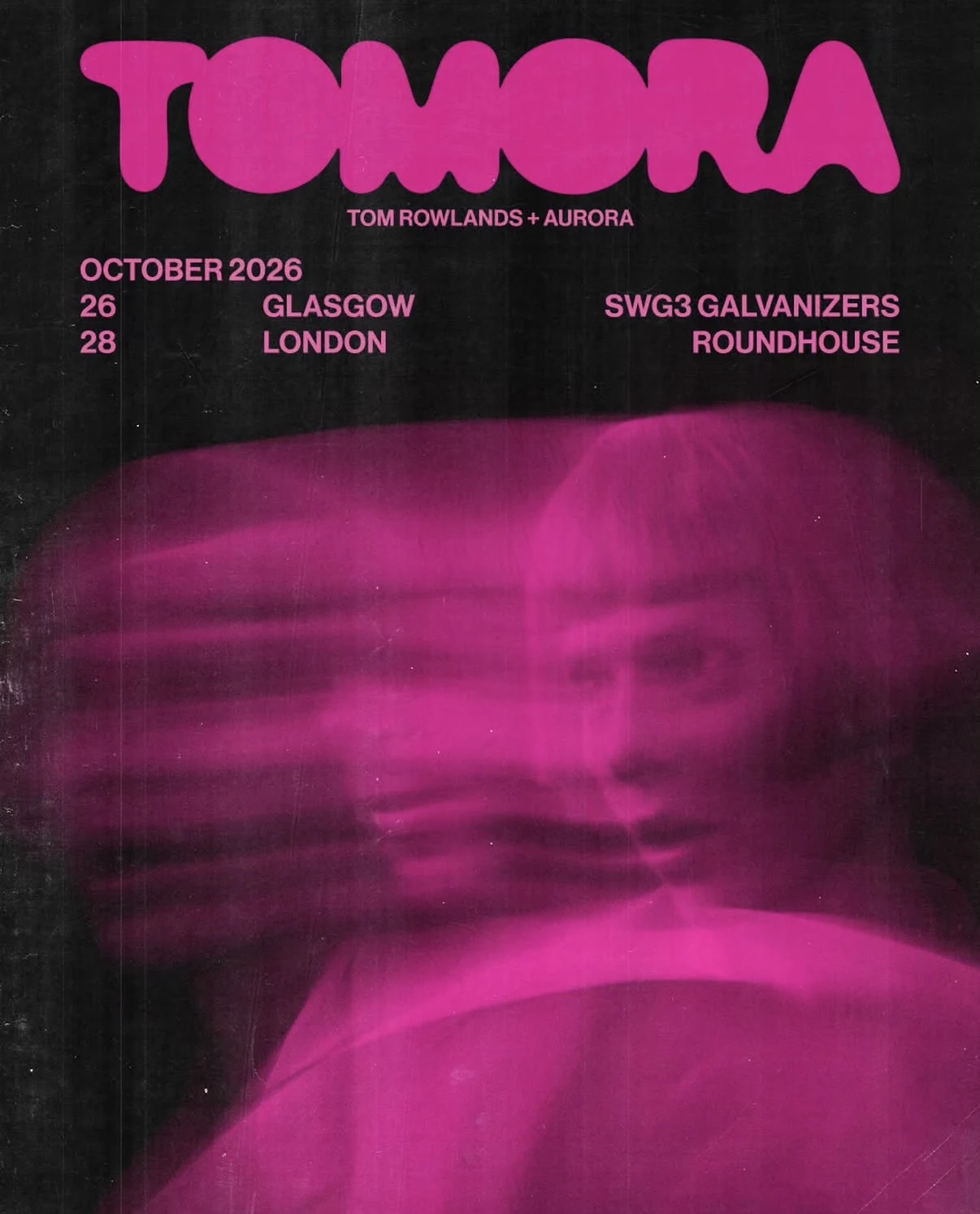
TOMORA at Roundhouse, London — 2026-10-28
At 9pm sharp, a robotic voice addressed the Roundhouse crowd. TOMORA would like to welcome everyone on an adventure, it announced, before declaring the venue a safe space and beginning a countdown. Pink neon illuminated the stage. Thirty seconds later, the adventure began.
TOMORA brings together Tom Rowlands, one half of The Chemical Brothers, and Norwegian singer-songwriter AURORA. On paper, their musical instincts seem worlds apart: Rowlands has spent decades building forceful electronic soundscapes, while AURORA brings a distinctive voice and an instinct for the unconventional. The question is whether those worlds can create something new together, rather than simply placing one artist’s vocals over the other’s production.
At the Roundhouse, there were good reasons to think they can.
“Ring the Alarm” opened the set, followed by “My Baby” and “Starvation”. Rowlands’ production supplied the force, while AURORA’s high vocals cut through the insistent rhythms and dense electronic textures. Her voice doesn’t simply soften the harder edges of the music. At times, it sounds almost alien against the machinery beneath it, bringing an emotional intensity that keeps the songs from settling into familiar dance-floor territory.
The contrast is what makes TOMORA compelling. Rowlands works with sound as something physical, designed to be felt as much as heard. AURORA brings a different kind of theatricality, with a voice that can make even the most synthetic passages feel personal. Neither side disappears into the other, and the music is at its most interesting when the two approaches pull against each other.
Their connection predates TOMORA. AURORA appeared on The Chemical Brothers’ 2019 album No Geography, and that creative relationship has since developed into a project of its own. TOMORA’s debut album, Come Closer, arrived on 17 April 2026, bringing their contrasting approaches together across a full-length release. The Celebration EP followed digitally on 16 October, less than two weeks before the Roundhouse show. “Celebration – Ritual Mix” and “What Do We Got” featured in the set, giving the performance a sense of a project still developing rather than a one-off meeting of established names.
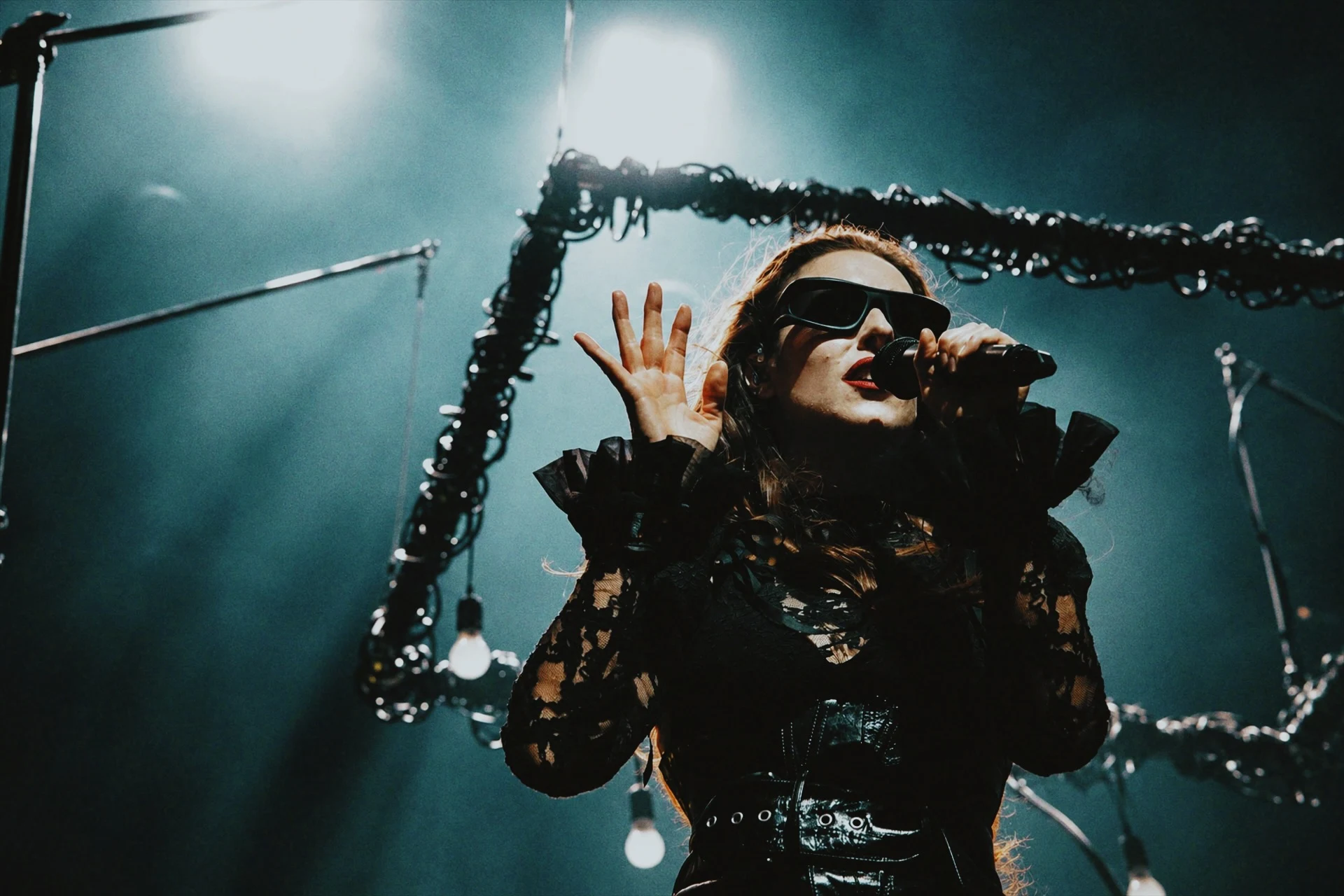
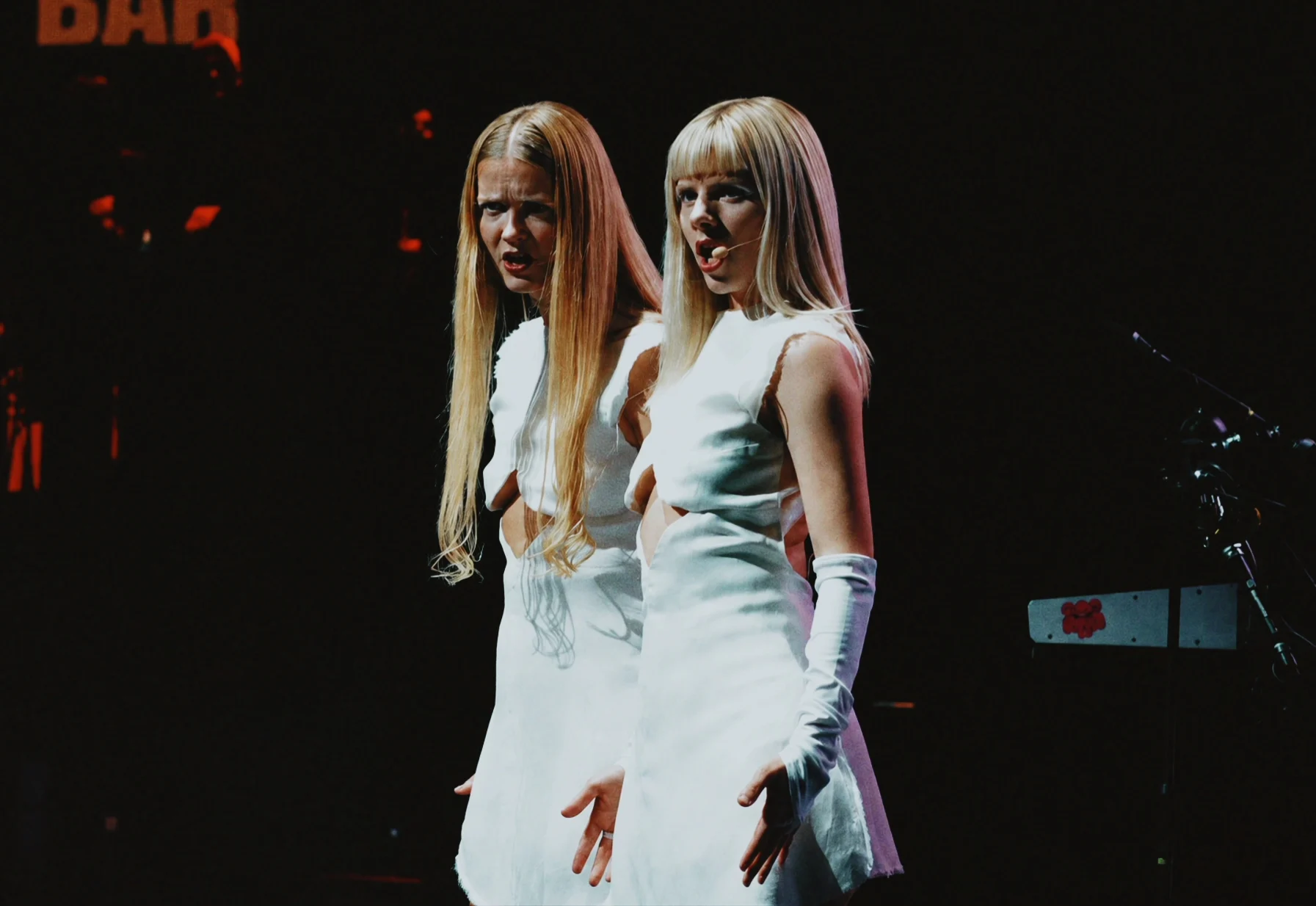
Oxis opened the evening before Rowlands and AURORA took the stage, joined by Amalie Holt Kleive. A large screen carried shifting graphics behind the performers, while pink, red and blue lighting altered the atmosphere throughout the set. Polka-dot patterns were projected across the stage, and the performers’ looks, including blue gloves, fluffy boots and distinctive white-rimmed sunglasses , formed part of the visual identity.
There was a deliberate oddness to it all. TOMORA seemed happy to let the performance veer into the surreal without explaining every choice or taking itself too seriously. Some people in the crowd had adopted the white-rimmed sunglasses themselves, suggesting that the look had travelled beyond the stage. The audience leaned towards The Chemical Brothers in its makeup, which was unsurprising given Rowlands’ involvement, but the show wasn’t simply trading on that association. It was building a world of its own, somewhere between electronic spectacle and AURORA’s more otherworldly sensibility.
The production was carefully controlled, though the visuals occasionally threatened to become the main event. Their greatest value was in giving the music a visual identity without requiring the performers to fill every moment with movement. The show had plenty to look at, but its more convincing moments came when the sound and the musicians themselves took centre stage.
AURORA and Amalie were particularly effective together. Their voices complemented one another without becoming interchangeable, adding layers while retaining their individual character. AURORA also played keyboard, and during “The Thing” both women took to the drums. It was one of the evening’s more revealing moments: the physical energy of the performance came not just from Rowlands’ electronic setup but from the women actively contributing to its rhythm. The collaboration felt less like a vocalist fronting a producer’s project and more like three performers working within the same musical framework.
The set drew on the artists’ wider musical histories, with “The Universe Sent Me”, “I Drink the Light”, “Somewhere Else” and “Eve of Destruction” sitting alongside TOMORA’s own material. Those connections gave the audience familiar reference points, but the longer-term test will be whether songs from Come Closer and Celebration become equally distinctive in their own right. The live show suggested that the material has the potential to develop beyond the reputations that brought people into the room.
For all the carefully constructed strangeness, the evening’s most direct moment came when AURORA spoke to the audience. She reflected on a world full of hatred and harmful people in positions of power, but returned to the idea that there are still people worth fighting for. Gathering voluntarily to sing and dance, she suggested, was a reminder of the good people can find in one another.
It was a striking shift in tone. The show could easily have remained a self-contained spectacle of electronic noise, unusual costumes and surreal imagery. Instead, her words brought the audience back to the reason they were there together. A concert cannot resolve the problems beyond its walls, but the shared experience of music can offer a brief counterpoint to them. AURORA seemed genuinely delighted to be in the room, and the sincerity of that exchange gave the performance a dimension beyond its visual excess.
The closing stretch brought “Come Closer”, “Celebration – Ritual Mix” and “What Do We Got”, before “My Body Is Not Mine” led into the encore. “In a Minute” brought the night to a close, returning the focus to the electronic force at the heart of TOMORA.
The Chemical Brothers connection will inevitably draw one audience, while AURORA brings another, but neither name alone explains TOMORA’s appeal. At the Roundhouse, Rowlands’ relentless production met AURORA’s striking vocals and Amalie’s contribution to create something that felt distinct from their other projects. Strange, theatrical and occasionally excessive, the show was most convincing when the music took precedence over the spectacle. TOMORA is still finding its identity, but this was more than an intriguing collaboration on paper: it was a project beginning to make a convincing case for itself.
Setlist
Intro Sequence / Ring the Alarm / My Baby / Starvation / The Universe Sent Me / The Thing / Somewhere Else / Eve of Destruction / I Drink the Light / Come Closer / Celebration – Ritual Mix / What Do We Got / My Body Is Not Mine
Encore
In a Minute