Lucy Kruger & The Lost Boys
Lucy Kruger & The Lost Boys at The Lexington, London — 2026-03-26
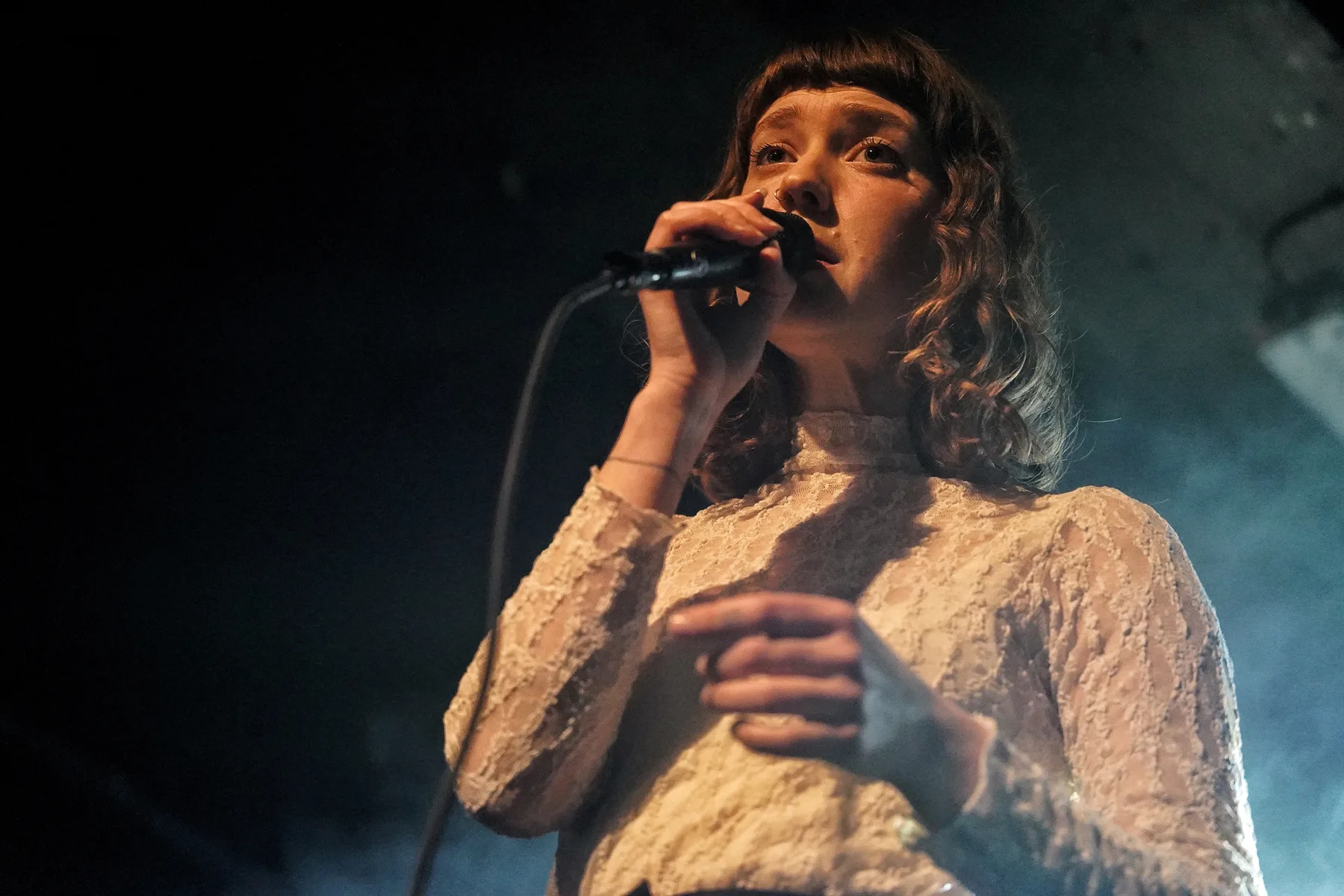
There’s a certain kind of crowd that gathers at The Lexington for shows like this. Not loud, not restless, just quietly expectant.
There’s a certain kind of crowd that gathers at The Lexington for shows like this. Not loud, not restless, just quietly expectant. On 26 March, that energy felt especially focused as Lucy Kruger & The Lost Boys arrived in London midway through their UK run in support of Pale Bloom, part of a wider European stretch that mirrors the same slow-burning intensity they bring to their music.
They didn’t so much take the stage as slip into it. “Animal/Symbol” emerged rather than began, the room almost adjusting around it. It set the tone straight away. This wasn’t a set built on obvious highs or easy hooks, but on patience, and a kind of emotional pressure that never fully lets go.
Kruger stands at the centre of it all, but not in a typical frontperson way. There’s no overt performance, no sense of playing to the room. She seems completely inside the music, shifting between stillness and something more instinctive. Her voice moves from a near whisper into something rawer, more physical. It feels less like singing and more like something being let out.
There’s also something quietly grounding about the fact that she is South African. You can hear it in the phrasing, in the slight turns of accent that slip through. As someone from South Africa myself, there’s a strange familiarity in that, even in a North London room. Not nostalgia exactly, more a kind of recognition.
I first saw Lucy perform over ten years ago in Johannesburg, completely by accident, back when she was playing with Medicine Boy. One of those nights where you turn up with no expectations and leave a bit different. I remember that set clearly, which says a lot given how many gigs blur into each other over time. It feels more distilled now, but no less affecting. It also makes you realise how consistently overlooked she has been.
Early on, “Bloom” and “Damp” set that slow, immersive tone, unfolding gradually with that near-spoken delivery and a low pulse sitting underneath it all. It’s subtle but physical, something you feel more than hear.
As the set moves through “Pray,” “Ghosts,” “Anchor” and “Heaving,” the room settles completely. No chatter, barely any movement beyond the occasional sway. Everyone just standing there, quietly locked in, more absorbed than expressive.
Later, “Reaching,” “Nectarine” and “Adder” open things out slightly. There’s a shift in texture, a bit lighter at points, but never fully relaxed.
“Ambient Heat” and “Auditorium” bring things into something more direct. “Auditorium” in particular lands differently, more spoken, more immediate, her voice sitting right there in front of you before gradually picking up into something closer to post-punk.
By the time “Howl” and “Burning Building” arrive, there’s a noticeable lift. A bit more urgency, a bit more release, small shifts in the room without anything tipping too far.
“Woolf” closes the main set, pulling things back just enough before they leave the stage.
They return for “Play” as the encore, a fitting closer that lets the set ease out without breaking its mood.
Walking out onto Pentonville Road afterwards, everything feels slightly heightened. Not louder, not brighter, just more present. It’s not the kind of gig you leave talking over straight away. It stays with you for a bit.
I was told to come up with something better than “captivating” to describe it, but there isn’t really a better word.
Setlist
Animal/Symbol / Bloom / Damp / Pray / Ghosts / Anchor / Adder / Fawning / Reaching / Nectarine / Ambient Heat / Auditorium / Howl / Burning Building / Woolf
Encore
Play